Githyanki names carry an astral, martial, and otherworldly sound that suits characters shaped by rebellion, survival, and life among the stars. A strong name should be easy to pronounce at the table, distinctive enough to remember, and flexible enough for a player character, NPC, guild, clan, or online gaming group.
The ideas below range from fierce warrior names and dark fantasy choices to funny clan names, short gamer tags, polished esports identities, and Clash of Clans-inspired options. They’re original creative suggestions rather than official names, so you can alter a vowel, combine two ideas, or use a name generator approach to create something that belongs entirely to your character.
What Makes a Strong Githyanki Name?
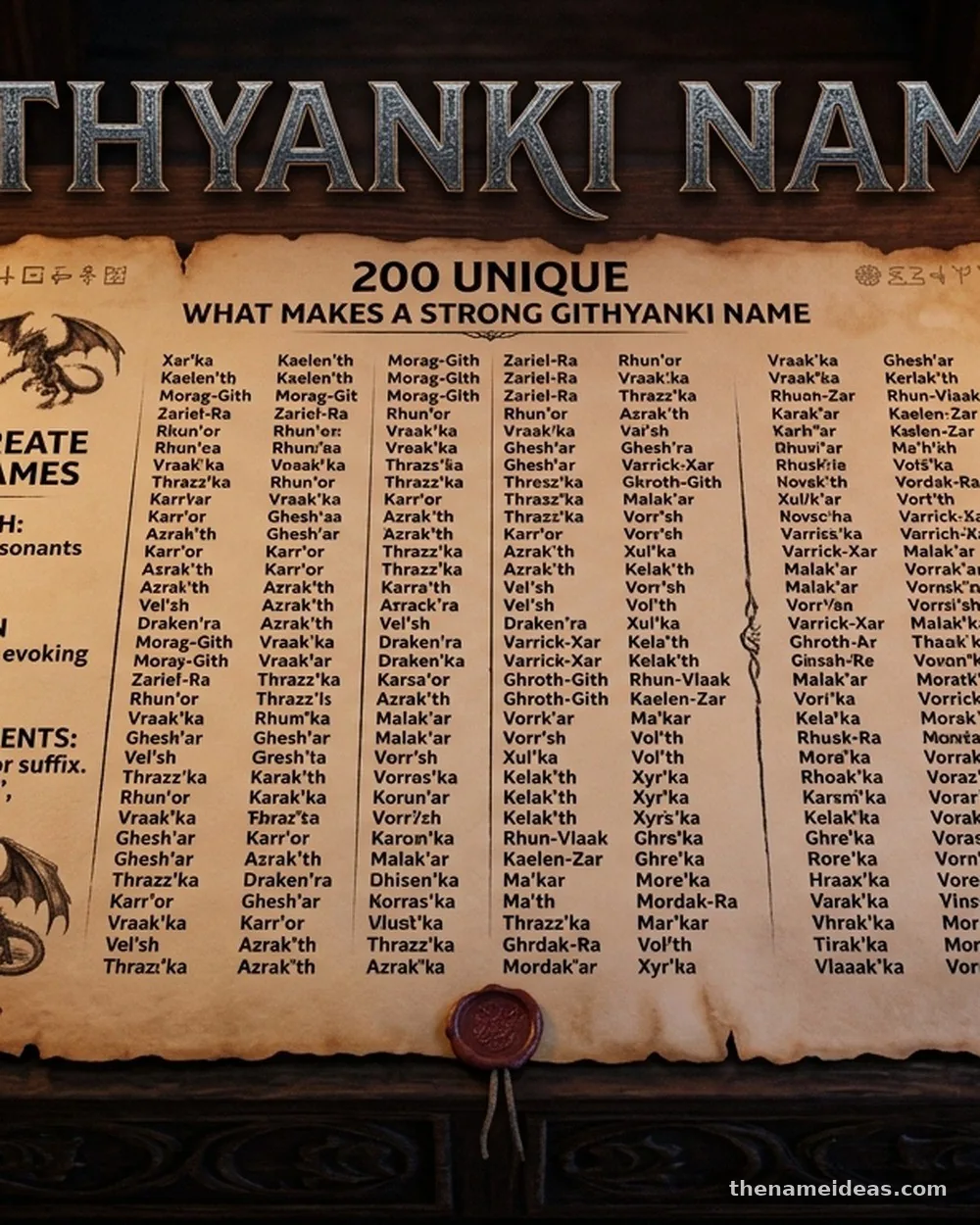
Githyanki names often work best when they sound sharp without becoming difficult to say. Consonants such as k, q, v, z, r, and x can create a martial edge, while open vowel sounds keep a name usable during fast dialogue at the table.
There’s no need to force every name into a rigid formula. A single name can feel more believable for a wandering warrior, while a title or clan tag can make sense for a guild, squad, or online community. Names such as “Kezra,” “Vorrik,” and “Zyren” are compact, but they still suggest a larger culture.
Before choosing, decide what the name needs to communicate:
- Personality: proud, disciplined, curious, humorous, ruthless, or diplomatic.
- Role: fighter, monk, rogue, spellcaster, commander, scout, or support player.
- Setting: tabletop fantasy, Baldur’s Gate-style roleplay, an astral campaign, or multiplayer gaming.
- Practical use: a character name may be longer, while a clan tag usually needs to be quick to type.
The best choice usually creates a clear first impression without explaining itself. If other players can hear it once and remember it later, the name is doing useful work.
Cool and Memorable Githyanki Names
These names are broad enough for player characters, NPCs, guild leaders, or gamer identities. They have a confident sound without locking the character into a purely evil or aggressive role.
- Vaezrik
- Qirasha
- Zorveth
- Kethrane
- Veyrith
- Raskava
- Ixorren
- Jhaevik
- Zerakai
- Vorrasha
- Qavren
- Thyrixa
- Korzai
- Ryveth
- Azrikan
- Veshkara
- Orqez
- Zhauric
- Kyrvane
- Razhik
- Xaevora
For a player character, read the name aloud beside the character’s class and background. “Vaezrik the fighter” has a different rhythm from “Vaezrik the courtier,” even though the name itself stays the same.
These options can also work as a base for a longer identity. “Qirasha” might become Qirasha of the Seventh Passage, while “Zorveth” could be paired with a battlefield title such as Ash-Bearer or Gatebreaker.
Warrior, Battle, and Intimidating Names
A battle-focused name should suggest discipline rather than relying only on violent language. That makes it more useful for a commander, veteran, or competitive gaming team whose identity is based on focus and consistency.
- Dravak Steelmark
- Kharzun Rededge
- Veyrak the Unbowed
- Qorvash Breaker
- Rhazek Ironwake
- Javrix Warpath
- Skarveth
- Azravax
- Korvane Bloodbanner
- Tharqis
- Vraksha Severance
- Zorakhel
- Raveth Chaincleaver
- Qezrik Dawnscar
- Khauric
- Vyrasha the Relentless
- Drakoren
- Jorvex
- Raskhir
- Zhaqor
- Velkris Lastblade
Names with a title are especially useful for campaigns that feature formal military ranks or rival factions. “Veyrak the Unbowed” tells the table something about history, while “Rhazek Ironwake” leaves room for the player to decide whether the name was earned, inherited, or self-appointed.
For an esports organization, avoid making the name so threatening that it becomes hard to brand. “Ironwake” or “Dawnscar” can fit a logo, clan tag, and tournament overlay more easily than a long phrase with several separate ideas.
Dark, Mysterious, and Astral Names
Githyanki characters naturally fit stories involving the Astral Plane, ancient enemies, lost memories, and dangerous crossings between worlds. The following suggestions lean into mystery without repeating familiar fantasy defaults.
- Nyxara Veilborn
- Ulqeth
- Vaeruun Hollowstar
- Zirasha Nocturne
- Keth Voidtide
- Ruunvek
- Qalara Duskwake
- Vexira Pale Orbit
- Orryx the Unseen
- Shaevra Nightglass
- Dravuun
- Yqeris Blackwake
- Kaelzha Veilstep
- Ravqir
- Zelveth Ashmoon
- Vorrin Stilldark
- Qyraxis
- Thalvek Starless
- Ixara Gloamward
- Orvasha
- Kezzar Deepveil
Dark names work particularly well for rogues, warlocks, spies, and morally complicated characters. They also suit a mysterious gaming community, especially if members prefer roleplay, survival games, or story-heavy multiplayer campaigns.
Try pairing a dark name with one bright or constructive detail. A character called “Shaevra Nightglass” might be a healer who protects travelers, while “Vaeruun Hollowstar” might secretly collect songs from every world visited.
Fantasy, Mythical, and Royal Names
These names are designed for characters who feel connected to prophecy, ancient bloodlines, legendary houses, or forgotten astral courts. They have a more ceremonial rhythm than the compact names in the earlier collections.
- Azerqai Highwind
- Veylasha Crownfall
- Qoradin Starheir
- Rhaevora
- Kyrzath the Exalted
- Jhaqira Moonthrone
- Velorak Sunscar
- Zarqessa
- Orthevik Grand March
- Vaelzara
- Qirvek Crownless
- Rhazara Dawncourt
- Thyronis
- Kezhara Silver Oath
- Vorzai High Banner
- Azravel
- Qalveth Star Regent
- Ravashka
- Zhaelor
- Yvarqis
- Kaevora First Wing
Royal names don’t require the character to be noble. “Crownless” and “First Wing” can suggest lost status, political ambition, or a title that the character has invented for personal reasons.
For fantasy artwork, these names provide strong visual prompts. “Jhaqira Moonthrone” suggests silver armor and a ceremonial blade, while “Qoradin Starheir” could inspire robes, banners, or a family emblem built around a broken constellation.
Githyanki Names for Male, Female, and Gender-Neutral Characters
Githyanki naming does not need to follow familiar human naming rules. A player can choose a name based on sound, family history, role, or personal identity rather than treating certain endings as exclusively masculine or feminine.
- Malevok
- Qezra
- Varkesh
- Shaqira
- Rhyvek
- Azraya
- Korrin
- Vezhara
- Jhaurik
- Qyressa
- Tharven
- Zarika
- Orvek
- Vaelsha
- Raqir
- Kezhira
- Vorrak
- Yzara
- Dravik
- Qalara
- Ryvex
“Male” and “female” lists can be useful search shortcuts, but they shouldn’t restrict character creation. A name such as “Qezra” can belong to any character, and a player can decide that its meaning comes from a family dialect, a military title, or a private chosen identity.
For a campaign, ask whether the name should sound formal in dialogue. A short name is easier for a dungeon master to repeat, while a two-part name can signal a character with a public reputation or a complicated past.
Short Githyanki Names and Clan Tags
Short names are valuable for usernames, character sheets, Discord servers, and games with limited display space. Each of these can stand alone or serve as the first half of a longer character name.
- Vek
- Qar
- Zhae
- Ryn
- Korr
- Vash
- Ixen
- Jor
- Threx
- Qira
- Vorn
- Zekai
- Razh
- Kesh
- Oqen
- Vyr
- Shaq
- Drav
- Yrex
- Kael
- Zorq
A short name is not automatically memorable. “Vek” is easy to type, but it may blend into a crowded multiplayer lobby; “Threx” has a more unusual shape and may be easier to recognize in a match recap.
For a clan tag, test how the name looks in uppercase, lowercase, and beside a username. A tag that works in a full title may become awkward when compressed to three or four letters, so check the visual shape before adopting it.
Funny, Clever, and Social Gaming Names
Funny clan names are a strong fit for friends who play casually, stream together, or value conversation as much as winning. Humor also makes a group feel welcoming, though an inside joke may confuse new members if it becomes too obscure.
- The Gith Happens
- Vlaad to Meet You
- Critical Gith-t
- Astral Projectionists
- Mind Flayer? No Thanks
- Roll Initiative Later
- The Unpaid Mercenaries
- Chaotic Good Neighbors
- Loot Before Logic
- Questional Decisions
- Respawn and Repeat
- Natural One Society
- Bag of Holding Pattern
- Party Wipe Picnic
- Spellcheck Pending
- Friendly Fire Department
- The Long Rest Club
- Critical Snackers
- Guild of Mild Concern
- Dice Before Advice
- We Meant To Do That
Some wordplay references tabletop culture rather than githyanki lore directly, which makes these names suitable for mixed gaming groups. “Astral Projectionists” can work for a fantasy guild, while “Friendly Fire Department” fits a squad whose personality is built around chaotic teamwork.
A funny name is more suitable than an intimidating one when the group welcomes beginners, plays cooperative games, or wants opponents to remember the joke. It may be less appropriate for a serious esports identity, where clarity and long-term branding often matter more than a punchline.
Gaming, Clash of Clans, and Guild Name Ideas
A general gaming clan name needs to survive changes in genre and membership. A group may play a strategy game one month, a role-playing campaign the next, and a competitive shooter after that, so a flexible name can have more lasting value than one tied to a single mechanic.
- Seven Gate Assembly
- Siege of the Silver Wing
- Raidborn Accord
- Keepers of the Ninth Keep
- Bannerfall Brigade
- Hearthstone Marauders
- Fortress of Odd Numbers
- Ravenwall Union
- Golden Gate Raiders
- Clan Red Meridian
- Citadel Cartographers
- March of the Unbroken
- Iron Orchard
- War Table Society
- Castlewake Circle
- Borderless Battalion
- Siegeborn Syndicate
- Warden’s Crossing
- Kingdoms at Dusk
- Outpost Eleven
- Banner and Blade
These are Clash of Clans-style suggestions rather than officially supported names or claims about in-game availability. Their language emphasizes bases, banners, raids, keeps, and alliances, which can suit strategy communities without requiring the group to copy one particular game’s setting.
A game-specific name can be more immersive. “Keepers of the Ninth Keep” sounds natural for a base-building clan, while “War Table Society” leaves room for tactical games, tabletop sessions, and organized multiplayer events.
For additional background on how the species is presented in the broader game system, players can consult the official D&D Beyond githyanki reference. A reference page can help separate established setting material from your own creative additions.
Cute, Aesthetic, Nature, and Elemental Names
Not every githyanki character needs to appear severe. Softer names can suit a curious traveler, a young adventurer, a support character, or a social gaming group that wants a distinctive identity without sounding hostile.
- Veyli Moonpetal
- Qiri Sunthread
- Rasha Cloudskip
- Kezzi Starling
- Zhara Dewwing
- Vori Bloomstrike
- Ixie Little Orbit
- Jhaeli Embercup
- Qava Rainwhistle
- Rynna Mosslight
- Velzi Frostberry
- Orrika Windbell
- Shaevi Brightroot
- Ziqi Skylace
- Kora Flamebud
- Yavra Tidepetal
- Vesha Glowfern
- Qelka Cloudberry
- Rova Sunmote
- Azzi Leafspark
- Thyra Starfruit
Nature and elemental imagery can create an interesting contrast with a character’s martial background. “Rasha Cloudskip” might be a daring scout, while “Kora Flamebud” could be a disciplined warrior who protects a small traveling community.
Aesthetic names also work well for social servers, art groups, and cozy multiplayer communities. They remain fantasy-flavored, but they don’t tell potential members that every session has to involve ranked play or intense competition.
Tech, Futuristic, and Space-Faring Names
Githyanki characters already have a natural connection to astral travel, strange vessels, and worlds separated by impossible distances. These names blend fantasy sounds with science-fiction imagery for campaigns or teams that embrace a multiverse-spanning feel.
- Qorix Relay
- Veyra Vector
- Zhaltek Orbit
- Ruun Circuit
- Kaevix Drift
- Ixara Signal
- Vorran Flux
- Qezel Meridian
- Jharix Array
- Zyra Cometline
- Orvek Pulsar
- Threxion
- Ravika Starlink
- Kezor Phase
- Vaelix Farpoint
- Qirren Astroforge
- Yzarek Launchwake
- Vasha Eventide
- Dravex Relayborn
- Oqira Lightyear
- Rhexal Voidroute
Tech-inspired names are particularly useful for a campaign that mixes ancient races with futuristic equipment or planar travel. They can also suit gaming groups that play space simulators, tactical science-fiction titles, or online games with a strong technology theme.
Try not to add technical vocabulary randomly. “Qezel Meridian” sounds more coherent because both parts suggest navigation, while a name assembled from several unrelated science terms may feel like a username rather than a character identity.
Professional, Polished, and Esports Names
Competitive teams need names that look credible on a bracket, jersey, stream overlay, or social profile. A polished name should be easy to spell, distinct in speech, and broad enough to remain useful if the roster or game changes.
- Arc Meridian
- Vanguard Passage
- Northstar Assembly
- Qorven Collective
- Redline Accord
- Parallax Guild
- First Passage
- Riftbound Union
- Axis Crown
- Silver Vector
- Helix Standard
- Grand Meridian
- Velaris Division
- Crosswind Order
- Keystone Armada
- Summit Circuit
- True Bearing
- Outer Ring Company
- Prime Passage
- Rallypoint House
- Stratos Assembly
These names use organization words such as “Assembly,” “Accord,” “Division,” and “House” because they communicate structure without claiming a specific fictional rank. They can support a more mature team identity than a deliberately goofy name.
Before using one for esports, search your own platform history, tournament listings, and social profiles. That check doesn’t guarantee availability, but it can reveal obvious confusion with an existing team and help your group choose a more distinctive variation.
How to Create More Distinctive Githyanki Names
A name generator can provide raw material, but the most personal results usually come from combining sound with character history. Start with one meaningful idea: exile, oath, navigation, revenge, curiosity, music, or loyalty. Then shape the name around that idea instead of adding random dramatic words.
One effective method is to build from three layers:
- Choose a sound profile. Decide whether the name should feel clipped and martial, flowing and ceremonial, or strange and astral.
- Add a private reference. Use a campaign location, family symbol, lost ship, favorite spell, or memorable failure.
- Test the spoken form. Say it with the character’s class, title, and likely dialogue. Remove any syllable that repeatedly causes hesitation.
For example, a player might begin with “star,” connect it to a character who guides refugees, and arrive at “Starward Qezra.” Another player might focus on an oath to recover a stolen blade and create “Rhazek Dawnscar.” The second name is stronger because it suggests a story without explaining the entire backstory.
Mixing familiar and unusual sounds can also help. A name made entirely of rare consonant clusters may look alien but become frustrating during play, while a completely ordinary name may lose the setting’s flavor. “Veyra,” “Kezor,” and “Qalara” sit in a useful middle ground.
Choosing a Name for Personality and Gaming Style
Your group’s preferred style should guide the name more than a list of fashionable words. A roleplay-heavy party may want a name with history, while a ranked squad may need something that sounds clear during callouts and looks good on a scoreboard.
| Group style | Useful naming direction | Example from the lists |
|---|---|---|
| Story-driven campaign | Use a title, oath, place, or family reference | Veyrak the Unbowed |
| Casual friends | Choose humor, shared experience, or playful fantasy | The Long Rest Club |
| Strategy clan | Use banners, keeps, raids, and alliances | Seven Gate Assembly |
| Competitive esports | Keep it brief, clear, and visually strong | Arc Meridian |
| Social community | Use welcoming language with a memorable image | Brightroot Circle |
| Dark fantasy group | Use mystery, absence, veils, or forgotten places | Shaevra Nightglass |
Think about the audience as well. An intimidating name may energize a serious competitive team, but a casual community could appear unwelcoming if its name sounds like a threat. Funny names create warmth, though they can become dated if the joke depends on a short-lived meme.
For a player character, ask whether the name reflects who the character is now or who they want to become. A disgraced commander might keep a grand royal name, while a young scout might choose something short to distance themselves from a strict military family.
Practical Checks Before You Adopt a Name
A creative name still has to work in ordinary use. Say it in voice chat, type it on a phone, place it beside a clan tag, and imagine another player trying to remember it after one encounter.
- Check spelling by asking someone unfamiliar with the name to write it after hearing it.
- Search your main game, Discord, and social platforms for obvious existing uses.
- Check whether the name has an unintended meaning in another language or community.
- Make sure the name does not imitate a real person, protected brand, or recognizable character too closely.
- Confirm that every group member can pronounce it comfortably.
- Decide whether the name still works if the group changes games.
- Keep a backup version with a different second word or spelling.
These checks are practical rather than legal guarantees. A name may be technically unused in one place and still create confusion elsewhere, especially if it resembles an established esports organization or a popular creator’s identity.
Consider longevity. “Loot Before Logic” may be ideal for a friends’ group today, while “Riftbound Union” can grow with a community that later hosts events, streams sessions, or recruits players from different games.
Common Mistakes to Avoid
The most common problem is choosing a name that is dramatic but interchangeable. If every option contains the same familiar words—such as Shadow, Elite, Titan, or Phantom—the result may sound like hundreds of other clans.
Another mistake is confusing complexity with originality. Excessive apostrophes, long strings of consonants, and multiple titles can make a name look setting-appropriate while making it difficult for players to say or search.
- Don’t use a joke that only one member understands.
- Don’t choose a name that depends on a temporary trend unless the group accepts that it may age quickly.
- Don’t make the spelling so unusual that teammates can’t find one another.
- Don’t assume an intimidating name automatically creates a competitive identity.
- Don’t give every character in a party names with the same opening sound.
- Don’t treat a generated suggestion as a finished identity without testing it in context.
Distinctiveness often comes from a specific detail rather than a louder adjective. “Iron Orchard” is memorable because the image is unexpected; “Ultimate Shadow Warriors” communicates a familiar idea without giving players much to remember.
FAQ About Githyanki Names
What is a good githyanki name?
A good githyanki name is distinctive, pronounceable, and suited to the character’s history or role. Options such as Qirasha, Veyrith, and Rhazek Dawnscar have a sharp fantasy sound while remaining practical at the gaming table.
What are some good male githyanki names?
Names such as Malevok, Varkesh, Rhyvek, Tharven, and Dravik can suit characters presented as male, but githyanki names do not need to follow strict gender rules. The character’s personality and backstory matter more than a particular ending.
What are some cool D&D names?
Cool D&D names usually combine a memorable sound with a small story clue. “Qoradin Starheir,” “Nyxara Veilborn,” and “Kezhara Silver Oath” suggest setting, history, or ambition without becoming difficult to say.
What is the githyanki name for a mind flayer?
The usual githyanki term for a mind flayer is illithid. That is a species or enemy designation rather than a personal githyanki name, so a character who wants to name a specific mind flayer might use a separate title, alias, or insult.
Can I use these names for a clan, guild, or username?
Yes. The shorter names work well for usernames and clan tags, while names such as Seven Gate Assembly, Arc Meridian, and The Long Rest Club suit larger gaming groups. Check the relevant platform yourself because availability, character limits, and naming rules can change.
Final Thoughts on Githyanki Names
The strongest Githyanki Names balance alien flavor with everyday usability. Choose a sound that matches the character or group, add one meaningful image or piece of history, and test the result aloud before committing to it.
For a campaign, let the name grow with the character’s story; for a clan or esports team, prioritize clarity, searchability, and a visual identity that can last across games. If one suggestion is close but not quite right, change a vowel, shorten a title, or combine two ideas until it feels like yours.