

Names for cocaine vary by country, community, form, and time period. Common street names can refer to powder cocaine, crack cocaine, or a mixture, but slang is inconsistent and should never be treated as proof of what a substance contains.
Understanding these terms matters because coded language can appear in conversations, messages, music, or medical and legal records. The information below explains widely reported slang terms, how they differ from formal drug terminology, and why recognizing them should lead to caution, support, and accurate health information rather than assumptions about a person.
What Are the Common Names for Cocaine?
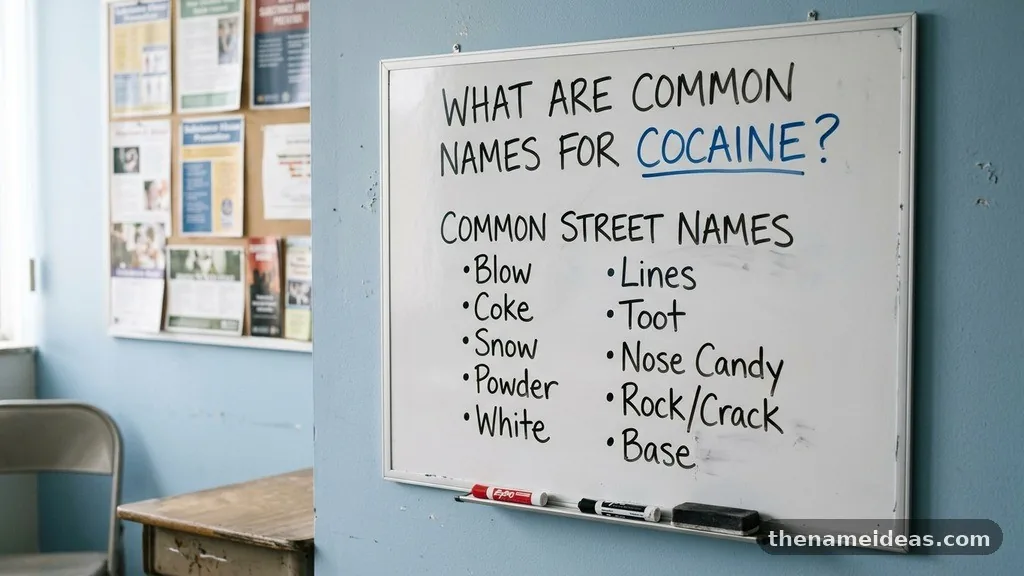
In English-language sources, cocaine is often called coke or blow. Other frequently reported terms include snow, powder, flake, nose candy, and white. These names usually refer to powder cocaine, but their use is not standardized.
Some terms describe a product’s appearance rather than its chemical identity. For example, “white” or “snow” may refer to a white powder, yet a white powder can contain substances other than cocaine. Street language can conceal uncertainty, adulteration, or a completely different drug.
| Term or phrase | Common association | Important limitation |
|---|---|---|
| Coke | General slang for cocaine | May refer to powder or cocaine generally |
| Blow | Powder cocaine | Meaning varies by region and speaker |
| Snow | White powder cocaine | Appearance does not confirm contents |
| Crack | Rock-form cocaine | Different form, but still cocaine and highly dangerous |
| Rock | Often crack cocaine | “Rock” can describe other substances in some settings |
| Speedball | Combination of cocaine and an opioid | Combination use sharply increases overdose danger |
One of the most important distinctions is between powder cocaine and crack cocaine. Powder cocaine is commonly described as cocaine hydrochloride, while crack is a smokable base form. Both contain cocaine, and neither street name indicates purity, dose, or safety.
“Speedball” is different from a simple nickname because it describes a combination of a stimulant and an opioid. The term has been used for cocaine combined with heroin or another opioid, including illicitly manufactured fentanyl. That combination can make the effects harder to predict and increases the risk of respiratory failure, cardiac complications, and fatal overdose.
Powder Cocaine Street Names
Powder cocaine is associated with the largest set of common slang terms. “Coke,” “blow,” “snow,” and “powder” are among the most recognizable, while “flake,” “white,” and “nose candy” appear in some English-speaking communities and older references.
- Coke: a broad, common nickname for cocaine.
- Blow: a long-established slang term, often meaning powder cocaine.
- Snow: a reference to the white appearance of some cocaine powder.
- Powder: a direct description that may be used in contrast with crack.
- Flake: a term linked to the appearance or claimed quality of cocaine.
- White: a shortened appearance-based reference.
- Nose candy: a euphemism associated with intranasal use.
- Soft: a term sometimes used to distinguish powder from crack, though it is not universal.
These names are not precise diagnostic terms. A person might use “powder” to describe cocaine, another stimulant, or an unknown substance that has not been tested. Likewise, “coke” can refer to cocaine in one conversation and to a brand of soft drink in another.
Context matters, but context is not certainty. A message that mentions “snow” or “blow” may be discussing a drug, a song lyric, a film, a joke, or something unrelated. Concern should be based on a pattern of behavior, physical symptoms, and safety circumstances rather than a single word.
Many powder-related names also appear in popular culture. That can make them seem casual or harmless, but slang does not change cocaine’s effects on the heart, brain, blood vessels, or mental health. A nickname is a linguistic label, not a risk classification.
Crack Cocaine and Other Form-Based Terms
Crack cocaine is generally described as a rock-like form of cocaine that can be smoked. Common terms associated with it include crack, rock, base, and, in some settings, hard. These terms are not used consistently across all regions.
The word “rock” is particularly unreliable. It may refer to crack cocaine, but it can also describe the physical form of another drug or an ordinary object in an unrelated conversation. “Base” may describe a chemical form, yet it is also used in other drug contexts.
| Form or description | Terms sometimes associated with it | Why the distinction matters |
|---|---|---|
| Powder cocaine | Coke, blow, snow, flake, powder | Often linked with intranasal use, but route and contents may vary |
| Crack cocaine | Crack, rock, base, hard | Usually associated with smoking and a rapid, intense effect |
| Mixed stimulant and opioid | Speedball | Stimulant effects can mask opioid sedation, increasing danger |
| Unknown powder or rock | Local or coded slang | The name cannot establish identity, strength, or contamination |
Crack cocaine can produce a rapid onset because smoking delivers the drug to the bloodstream quickly through the lungs. A rapid onset may be followed by a short-lived effect and repeated use, which can intensify cravings and increase exposure to harm.
Neither powder nor crack is automatically “safer.” The risks differ by route, dose, frequency, health status, and what else is present. Cocaine can raise heart rate and blood pressure, trigger irregular heart rhythms, and contribute to stroke, seizures, severe anxiety, or psychosis.
Terms such as “freebase” may also appear in historical or technical discussions of cocaine. They should not be treated as interchangeable with every use of “crack,” because terminology has changed over time and informal speakers may use the words loosely.
Regional and Coded Slang Terms
Cocaine slang is shaped by geography, age, social group, language, and popular culture. A term that is widely recognized in the United States may be unfamiliar in the United Kingdom, Australia, Canada, or a Spanish-speaking community. Even within one city, the same word may carry different meanings.
Some sources report terms such as charlie, perico, farlopa, or coca in particular countries or language communities. These words should be interpreted cautiously because local usage changes, and a term can have an ordinary meaning outside drug-related conversation.
- English-language slang: coke, blow, snow, powder, crack, and rock.
- Regional references: terms that appear more often in particular countries or cities.
- Language-specific terms: words borrowed from Spanish or other languages.
- Private code: phrases created by a small group to avoid direct wording.
- Pop-culture expressions: lyrics, film dialogue, or older slang that may not reflect current usage.
Private code is especially difficult to interpret. People may use food names, colors, numbers, initials, or ordinary objects as substitute language in texts and social media. A coded phrase only becomes meaningful through surrounding evidence, and even then it may remain ambiguous.
Parents, teachers, employers, and friends should avoid treating a slang list like a translation key. Searching a word is a reasonable first step, but a conversation conducted calmly is more useful than an accusation based on vocabulary alone.
Language also evolves faster than formal health guidance. Some old terms disappear, while new terms spread through social media or local networks. Public health agencies generally focus on the substance and its effects rather than attempting to maintain a definitive list of every nickname.
Why Cocaine Has So Many Street Names
Drug slang serves several purposes. It can create group identity, soften the perceived seriousness of cocaine use, distinguish one form from another, or make a conversation less obvious to people outside the group.
Nicknames can also be commercial or persuasive. Words suggesting cleanliness, quality, or status may be used to make a product sound more attractive, even though a street name provides no evidence about purity or potency.
Another reason is simple cultural repetition. A term may spread through music, television, film, online posts, or conversations and remain in use long after its original context has changed. Some phrases are decades old; others are temporary local expressions.
Slang can conceal risk in a second way: it may make a drug sound separate from its pharmacology. “Coke,” “blow,” and “snow” can sound like different products, although they may refer to the same substance. “Rock” may sound like a different drug, even though it can refer to a different form of cocaine.
Terminology can also reflect route of administration. Powder cocaine is commonly associated with snorting, while crack is commonly associated with smoking. These routes produce different patterns of onset and duration, but both can expose a person to serious medical consequences.
Public discussions should therefore use plain language alongside slang. Saying “the term may refer to cocaine, but it does not prove what the substance is” is more accurate than treating a nickname as a confirmed identification.
Health Risks Behind the Names
Cocaine is a powerful stimulant that affects the central nervous system and cardiovascular system. It can increase alertness and energy temporarily, but it can also cause agitation, panic, overheating, high blood pressure, irregular heartbeat, seizures, stroke, and heart attack.
The risk does not depend only on whether someone uses powder or crack. Cocaine may be mixed with other substances, and a person may not know the contents or strength. Illicit products can contain fentanyl or other compounds, creating overdose risks that are not obvious from color, texture, or a street name.
Short-term warning signs can include chest pain, trouble breathing, severe headache, confusion, loss of consciousness, extreme agitation, seizures, or a very high temperature. These symptoms require emergency help.
- Chest pain or pressure, especially with sweating, nausea, or shortness of breath.
- Seizure, collapse, or unresponsiveness.
- Severe confusion, hallucinations, or dangerous agitation.
- Weakness, facial drooping, or trouble speaking, which can indicate stroke.
- Slow or abnormal breathing, particularly when an opioid may also be involved.
- Extreme overheating or rapidly worsening symptoms.
If someone is unresponsive or breathing abnormally, call the local emergency number immediately. If opioid exposure is possible and naloxone is available, use it according to local instructions while waiting for emergency responders; naloxone will not reverse cocaine itself, but it can reverse an opioid component.
Combining cocaine with alcohol creates cocaethylene in the body, a compound associated with additional cardiovascular strain. Combining cocaine with heroin, fentanyl, or another opioid is especially dangerous because stimulant effects may make a person underestimate opioid sedation and respiratory depression.
Repeated cocaine use can lead to cocaine use disorder, a medical condition involving impaired control, cravings, continued use despite harm, and difficulty stopping. Treatment can include behavioral therapies, mental-health care, medical monitoring, and support for related problems such as depression, anxiety, housing instability, or trauma.
How to Interpret Cocaine Slang Responsibly
A single slang term is not enough to conclude that someone is using cocaine. “Coke,” for example, can appear in ordinary speech, branding, music, or a quotation. Interpretation should consider the full conversation and whether there are accompanying safety concerns.
When the issue involves a friend or family member, use specific observations rather than labels. “I noticed you’ve been awake all night, seem frightened, and complained of chest pain” opens a more productive conversation than “You’re using coke.”
Do not search a person’s belongings or confront them while they are highly agitated or intoxicated. If there is immediate danger, prioritize distance, emergency assistance, and safety for everyone nearby.
For educational or professional work, describe the term as reported slang rather than confirmed evidence. This wording recognizes that language differs by region and that the substance itself may be unknown.
The [National Institute on Drug Abuse information on cocaine](https://nida.nih.gov/research-topics/cocaine) provides evidence-based background on cocaine’s effects, health risks, and treatment research. A reputable medical source is more dependable than a crowd-sourced slang list when a health decision is involved.
Schools and workplaces should avoid publishing sensational lists without context. A glossary can be useful for prevention or safeguarding, but it should explain uncertainty, avoid stereotyping, and include clear routes to confidential support.
Getting Help for Cocaine Use
People do not need to wait for a crisis before asking for help. A primary-care clinician, addiction specialist, mental-health professional, or local treatment service can help assess cocaine use and identify an appropriate plan.
There is no single treatment approach that fits everyone. Some people benefit from structured outpatient care, while others need residential treatment, medically supervised support, or help with a co-occurring mental-health condition.
- Start with a confidential assessment: discuss frequency, route, cravings, sleep, mental health, and other substances.
- Identify immediate risks: chest symptoms, severe anxiety, suicidal thoughts, psychosis, or opioid exposure need urgent attention.
- Build practical support: reduce contact with high-risk settings, involve trusted people, and plan for cravings.
- Address related needs: housing, trauma, employment, legal concerns, and physical health can affect recovery.
- Keep trying after setbacks: a return to use is a signal to adjust support, not proof that treatment cannot work.
Behavioral treatments are commonly used for cocaine use disorder, including cognitive behavioral approaches and contingency-management programs where available. Clinicians may also treat depression, anxiety, sleep problems, or other substance use at the same time.
Friends and relatives can help by listening without enabling dangerous behavior. Practical support might mean offering transportation to an appointment, helping locate a service, or staying present while a person contacts a helpline.
Emergency symptoms should never be handled through an online slang search. Call emergency services for collapse, seizure, severe chest pain, breathing problems, suspected stroke, or a person who cannot be awakened.
Common Mistakes When Using Street-Name Lists
The first mistake is assuming that a street name identifies a substance. It does not. Slang can be regional, deliberately misleading, outdated, or used jokingly.
The second mistake is assuming that different names always mean different drugs. “Coke,” “blow,” and “snow” may all refer to powder cocaine, while “crack” and “rock” may refer to a smokable form. The precise meaning depends on context.
A third mistake is treating appearance as evidence of quality. White powder, a rock-like piece, or a particular smell cannot reliably establish chemical contents. Testing methods also have limitations and should not be presented as a guarantee of safety.
| Mistake | Why it is unreliable | Better approach |
|---|---|---|
| Assuming one word proves drug use | Many terms have ordinary meanings | Consider patterns, context, and direct safety concerns |
| Assuming a nickname proves purity | Slang is not laboratory testing | Treat unknown substances as potentially dangerous |
| Using old lists as current fact | Language changes by place and generation | Use current health and local support information |
| Ignoring combinations | Alcohol and opioids can change the risk substantially | Ask emergency responders about all possible substances |
Another mistake is using slang to stereotype people. Language alone cannot establish addiction, intent, or character. A respectful approach keeps attention on observable risk and the person’s need for accurate information or support.
Finally, avoid repeating a long list of names in a way that glamorizes or normalizes cocaine. Education works best when terms are paired with context about uncertainty, effects, overdose, and recovery.
Frequently Asked Questions About Cocaine Street Names
What is the most common slang term for cocaine?
Coke is one of the most widely recognized English-language terms, while “blow” and “snow” are also common in some settings. No single term is universal, and none confirms that a substance is actually cocaine.
What is the slang for crack cocaine?
“Crack” is the standard common term, and “rock” is also frequently reported. “Base” and “hard” may appear in some communities, but their meanings can vary. Crack is a form of cocaine commonly associated with smoking.
Does “white powder” mean cocaine?
No. A white powder may contain cocaine, another drug, a mixture, or an inactive substance. Color and texture are not reliable ways to identify a drug, and unknown powders can carry overdose risks.
What does “speedball” mean?
“Speedball” usually refers to combining cocaine with an opioid such as heroin or fentanyl. This combination is particularly dangerous because stimulant effects can obscure opioid sedation while both drugs place stress on the body.
How should I respond if I think someone is using cocaine?
Choose a calm moment, describe specific observations, and encourage medical or addiction support without making a diagnosis. If the person has chest pain, a seizure, severe confusion, breathing problems, or cannot be awakened, contact emergency services immediately.
Conclusion
Names for cocaine include familiar terms such as “coke,” “blow,” “snow,” “powder,” “crack,” and “rock,” but their meanings shift across regions and communities. A street name cannot establish a substance’s identity, purity, dose, or safety, and a single word should never be treated as proof of drug use.
The practical response is to focus on context, observable symptoms, and reliable health information. If cocaine use, addiction, or overdose risk is involved, seek professional help early and treat emergency symptoms as urgent. Share a trusted medical resource with someone who may need support, and approach the conversation with accuracy rather than judgment.