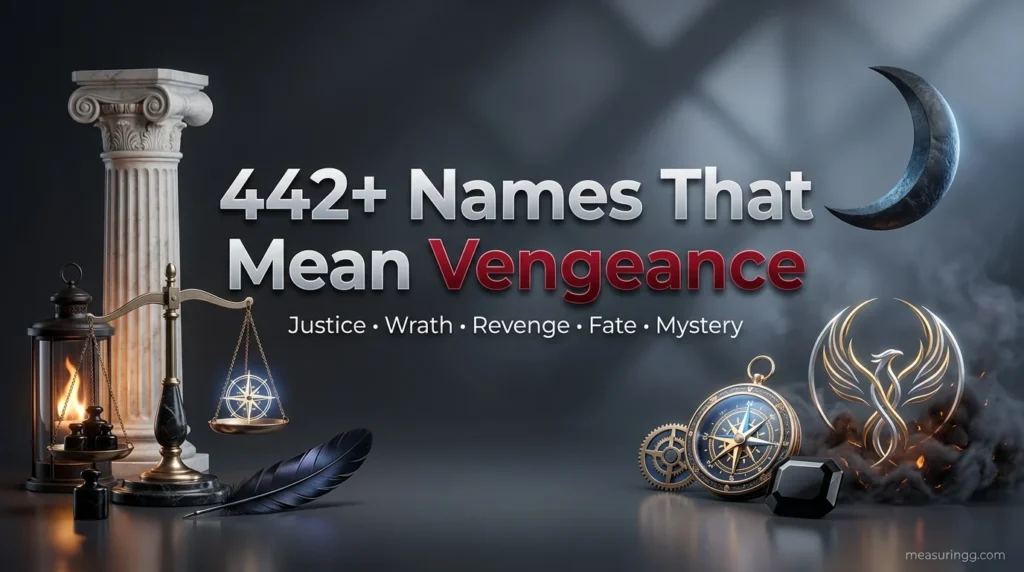
Finding a name connected with vengeance, justice, wrath, revenge, mystery, or transformation can be surprisingly difficult. Many name websites mix literal translations with mythology, symbolism, fictional associations, and modern interpretations without explaining the difference.
This guide takes a more useful approach. Instead of treating every dramatic-sounding name as a literal translation of “vengeance,” the names below are organized by meaning, cultural association, tone, and practical naming use. That distinction matters if you are choosing a character name, username, group name, gaming identity, creative project, story character, or simply researching powerful names.
Editorial note on the 2026 angle: there is no reliable way to verify that a name meaning or popularity statistic is completely “unavailable on every website.” Rather than inventing supposedly private data, this article provides an original 2026 naming framework: names are grouped by semantic theme, tone, usability, and strength of association. Where a name is associated with vengeance through mythology or literature rather than literally translating to “vengeance,” that distinction is explained.
Top 5 Trending Name Picks for 2026
- Nemesis — ⚡ A bold mythological choice strongly associated with retribution and the balancing of wrongdoing.
- Justitia — ⚖️ A refined Latin-inspired choice connected with justice and fair judgment.
- Valkyrie — 🛡️ Dramatic, powerful, and highly recognizable for fantasy or creative naming.
- Revenant — 🌙 A mysterious modern choice suggesting someone who returns after being gone.
- Alecto — 🔥 A striking mythological name associated with relentless anger and vengeance.
Quick naming tip: If you want the literal meaning of “vengeance,” your choices are much narrower than if you want a name that symbolizes retribution, justice, wrath, or a return for unfinished business. The sections below deliberately separate those ideas.
Male Names That Mean Vengeance
These masculine names and masculine-coded choices work particularly well when you want a name to suggest retribution, strength, judgment, or a determined response to wrongdoing. Some are direct mythological associations rather than dictionary translations of “vengeance.”
- Nemesis — Greek mythology’s embodiment of retribution; exceptionally strong for a symbolic or fictional name.
- Ragnar — A Scandinavian name with a powerful warrior image, although it does not literally translate as vengeance.
- Sigurd — Old Norse heroic name associated with victory and legendary courage.
- Alexander — Greek in origin and traditionally connected with defending or protecting people.
- Victor — Latin for “conqueror” or “winner,” making it suitable for a triumphant theme.
- Justus — Latin name connected with justice and righteousness.
- Valerian — A Roman name associated with strength and vigor.
- Maximus — Latin for “greatest,” useful when the intended character is powerful and commanding.
- Ares — The Greek god of war; better interpreted as a war-associated name than a literal synonym for vengeance.
Best use: These work especially well for fictional protagonists, fantasy characters, gaming identities, and bold project names. If you need an actual baby name, consider cultural background and everyday usability before choosing a highly mythological option.
Girl Names That Mean Vengeance
Feminine names associated with vengeance often come from Greek mythology, classical literature, divine justice, or concepts of strength. They can sound elegant rather than aggressive, making them useful for characters who need both beauty and power.
- Alecto — One of the Erinyes in Greek mythology, associated with unceasing anger and retribution.
- Megaera — A Greek mythological Fury traditionally connected with jealousy and rage.
- Tisiphone — A mythological Fury associated with avenging murder.
- Nemesis — The Greek personification of retribution and balance.
- Kali — A major Hindu goddess associated with time, transformation, and destruction; cultural context is important.
- Durga — A Hindu goddess associated with protection and overcoming evil.
- Athena — Greek goddess associated with wisdom and strategic warfare rather than vengeance itself.
- Bellona — Roman goddess of war.
- Victoria — Latin name meaning “victory,” making it a softer alternative to explicitly revenge-themed names.
Naming insight: Names such as Victoria, Athena, and Durga demonstrate an important distinction: a powerful name does not have to literally mean “revenge.” A name can instead communicate victory, protection, courage, or righteous strength.
Names That Mean Revenge in Japanese
Japanese naming requires extra care because a single English word rarely maps neatly to a conventional Japanese given name. Fukushū (復讐) means “revenge” or “vengeance,” but it is not a typical Japanese personal name.
For creative projects, characters, usernames, or fictional settings, Japanese vocabulary and concepts can be more appropriate than pretending that ordinary Japanese given names literally mean revenge.
- Fukushū (復讐) — “Revenge” or “vengeance”; a vocabulary word rather than a conventional given name.
- Shū (讐) — A kanji associated with vengeance or an enemy, but highly unusual as an everyday personal name.
- Seigi (正義) — “Justice” or “righteousness.”
- Ikari (怒り) — “Anger” or “rage”; a vocabulary term rather than a standard given name.
- En (怨) — Associated with resentment, grudge, or deep hostility; best treated as a thematic kanji rather than a normal given name.
- Urami (恨み) — “Resentment,” “grudge,” or “grievance.”
- Tatakai (戦い) — “Battle” or “fight.”
- Katsuo (勝男) — A traditional masculine name construction incorporating the idea of victory.
- Masayoshi (正義) — A name historically interpreted through characters associated with correctness and justice, depending on the kanji used.
Important: Japanese names depend heavily on kanji selection. Two people may have the same pronunciation but different meanings because they use different characters. For an authentic Japanese name, verify the exact kanji and whether native speakers would actually use it as a personal name.
Names That Mean Justice
If “vengeance” feels too harsh, justice is often the more versatile naming direction. Justice-themed names can communicate fairness, integrity, truth, law, protection, or moral balance without sounding hostile.
- Justus — Latin, associated with being just or righteous.
- Justina — Feminine form related to the Latin justice family.
- Justin — Derived from the same Latin naming tradition.
- Justice — An English virtue name directly expressing the concept.
- Justine — Feminine form related to Justin.
- Justitia — Latin personification of justice.
- Themis — Greek goddess associated with divine law, order, and custom.
- Dike — Greek personification of justice.
- Verity — English virtue name associated with truth.
Why justice can be better than vengeance
For a business, community, organization, or public-facing project, justice-themed names usually have broader appeal. A name like Justitia can suggest fairness and authority, while a revenge-specific name may imply hostility.
For a fictional character, however, the contrast can be useful: a character named for justice may begin with noble intentions but face increasingly difficult moral choices.
Names That Mean Wrath
Wrath-themed names are ideal when the intended tone is intense, dramatic, mythological, fiery, or formidable. As with vengeance, some examples below are associated with wrath rather than literally translating into the English word “wrath.”
- Alecto — One of the Erinyes, traditionally associated with relentless anger.
- Megaera — One of the Furies of Greek mythology.
- Tisiphone — A Fury associated with avenging murder.
- Furor — Latin concept associated with rage or frenzy; better suited to fiction than everyday naming.
- Erinys — Greek term connected with an avenging Fury.
- Lyssa — Greek personification associated with mad rage or frenzy.
- Menis — An ancient Greek concept associated with wrath or anger, especially divine anger.
- Achilles — Famous Greek heroic figure whose story includes powerful anger and conflict.
- Kali — Associated with transformation, destruction, and the defeat of evil within Hindu religious traditions.
🔥 Creative tip: Wrath-themed names tend to work better for fantasy characters, fictional factions, game clans, and creative projects than for ordinary professional identities.
Names Meaning Revenant
A revenant is someone or something that returns after being absent. The word is particularly useful in fantasy and storytelling because it creates a feeling of return, mystery, persistence, and unfinished history.
Not every name in this section literally translates to “revenant.” Some represent the closely related ideas of returning, resurrection, rebirth, immortality, or coming back.
- Revenant — French-derived English word meaning one who returns.
- Phoenix — Mythical bird associated with renewal and rebirth.
- Anastasia — Greek-derived name associated with resurrection.
- Anastasius — Masculine form associated with resurrection.
- Renata — Latin-derived feminine name associated with being born again.
- Renatus — Latin masculine form associated with rebirth.
- Nova — Latin for “new,” also evoking a dramatic new beginning.
- Genesis — Associated with origin, beginning, or creation.
- Aurora — Latin for “dawn,” symbolizing a new beginning after darkness.
🌙 Best interpretation: If you are naming a character who “returns,” Phoenix, Renata, Renatus, Anastasia, and Revenant communicate the concept more naturally than simply searching for a literal synonym.
Names That Mean Sin
This is another category where literal translation and symbolic association should not be confused. “Sin” is a theological and moral concept, and many traditional names instead express ideas such as guilt, temptation, transgression, or the opposite concept of purity.
- Sin — The English word itself; also appears as a name element in some fictional contexts.
- Samael — A complex figure in Jewish and later religious traditions whose interpretation varies significantly by source.
- Lilith — A legendary figure with extensive later literary associations; not literally a translation of “sin.”
- Delilah — Biblical name associated in popular culture with betrayal and seduction, although the name itself should not simply be translated as “sin.”
- Judas — Biblical name strongly associated in later Christian tradition with betrayal.
- Loki — Norse mythological trickster figure associated with deception and transgression.
- Mara — A name with multiple cultural histories and meanings; in some traditions it carries darker associations.
- Eve — A biblical name connected to the Genesis narrative and later cultural interpretations of temptation and the Fall.
- Temptation — An English concept-word that can work as a fictional or artistic title but is not a conventional personal name.
Research note: A responsible name guide should never claim that a famous mythological or biblical character’s actions automatically define the linguistic meaning of their name.
Names That Mean Disguise
Names connected with disguise, secrecy, masks, hidden identity, illusion, or transformation can be excellent for mystery characters, fictional organizations, online aliases, and creative projects.
- Alias — A word meaning an alternative name or identity.
- Mask — A direct English concept associated with concealment.
- Mystique — A French-derived word suggesting mystery or an intriguing quality.
- Veil — A poetic word associated with hiding or covering something.
- Shadow — A strong symbolic name for something concealed.
- Phantom — A mysterious or apparently supernatural figure.
- Mirage — An optical illusion and a strong metaphor for something deceptive or elusive.
- Cloak — A direct metaphor for concealment.
- Enigma — A Greek-derived word associated with something puzzling or mysterious.
🕵️ These are primarily concept names, not conventional personal names. They are particularly effective for fictional characters, online identities, creative teams, and mystery-themed projects.
Mythological Names Associated With Retribution and Power
Mythology provides some of the richest naming material for vengeance-themed concepts because many ancient traditions personified justice, fate, war, punishment, or retribution.
- Nemesis — Greek personification of retribution.
- Alecto — Greek Fury associated with relentless anger.
- Megaera — Greek Fury associated with rage and jealousy.
- Tisiphone — Greek Fury associated with avenging murder.
- Erinys — Singular form connected with an avenging Fury.
- Themis — Greek divine figure associated with law and order.
- Dike — Greek personification of justice.
- Adrasteia — Greek figure associated with unavoidable retribution.
- Bellona — Roman goddess associated with war.
These names have an important advantage: their stories provide context. Someone encountering Nemesis, for example, immediately gets a stronger thematic impression than they would from an invented word.
Strong Names Inspired by Victory, Retribution, and Triumph
Sometimes the best vengeance-themed name does not mention revenge at all. A name suggesting victory after hardship can produce a more sophisticated result.
- Victoria — Latin for “victory.”
- Victor — Latin for “conqueror” or “winner.”
- Vincent — Traditionally associated with conquering or prevailing.
- Valentina — Associated with strength and health in its Latin roots.
- Valentin — Masculine form from the same Latin family.
- Nike — Greek goddess and personification of victory.
- Nikhil — A Sanskrit-derived name with meanings depending on interpretation and tradition.
- Alessandro — Italian form of Alexander, associated with defending people.
- Alexandra — Feminine form associated with defending or protecting.
🏆 These are especially suitable when you want a name that sounds confident rather than threatening.
Dark-Aesthetic Names for Characters and Creative Projects
A dark aesthetic does not require an explicitly violent meaning. Words associated with night, shadow, mystery, silence, storms, and secrets can create the same atmosphere while remaining more versatile.
- Nocturne — A poetic word associated with night.
- Nyx — Greek primordial personification of night.
- Umbra — Latin for “shadow.”
- Eclipse — A striking astronomical term suggesting darkness and transformation.
- Raven — A bird name strongly associated with mystery in literature and folklore.
- Onyx — A gemstone name with a dark visual aesthetic.
- Obsidian — Volcanic glass and a popular dark-themed creative name.
- Vesper — Latin-derived name associated with evening.
- Morrigan — Irish mythological figure associated with sovereignty, war, and fate.
🖤 These are excellent for usernames, fictional characters, art projects, gaming identities, and fantasy settings.
Names With a Noble Justice Theme
If your goal is to communicate authority without aggression, noble justice names are a strong middle ground. They work particularly well for leaders, fictional rulers, organizations, and characters who believe strongly in fairness.
- Regina — Latin for “queen.”
- Rex — Latin for “king.”
- Augustus — Latin name associated with majesty and dignity.
- Augusta — Feminine counterpart associated with dignity and grandeur.
- Constantine — Associated with constancy and steadfastness.
- Constantia — Latin name connected with steadfastness.
- Honora — Associated with honor.
- Honor — English virtue name.
- Noble — English virtue-style name suggesting honorable character.
⚖️ A useful naming principle is “authority plus restraint.” A name feels more sophisticated when it suggests that the character has power but does not necessarily seek conflict.
Names Inspired by Fate and Inevitable Consequences
Vengeance stories often revolve around the idea that actions eventually have consequences. Names connected with fate, destiny, inevitability, and cosmic balance can therefore capture the theme indirectly.
- Moira — Greek term associated with fate and destiny.
- Moirai — The Greek Fates collectively.
- Clotho — One of the Greek Fates.
- Lachesis — One of the Greek Fates.
- Atropos — One of the Greek Fates, traditionally associated with the inevitable end of life.
- Fate — Direct English concept name.
- Destiny — English virtue/concept name.
- Fortuna — Roman goddess associated with fortune and fate.
- Tyche — Greek goddess associated with fortune and chance.
✨ These names are useful when you want the theme to feel mysterious and philosophical instead of openly confrontational.
Modern Names That Sound Powerful Without Being Literal
Modern naming often favors short, memorable, brandable sounds. These choices are not presented as literal translations of vengeance; instead, they are selected for the feeling they create.
- Vexa — Modern invented-style name with a sharp sound.
- Riven — English word associated with being split or torn apart.
- Valor — English word associated with courage.
- Rogue — English word suggesting independence or unconventional behavior.
- Reign — English word associated with rule or authority.
- Fury — English concept word associated with intense anger.
- Ember — A glowing fragment of fire; symbolic of something continuing beneath the surface.
- Blaze — A strong fire-inspired word.
- Onyx — Short gemstone-inspired name with a polished aesthetic.
💡 Branding note: Invented names such as Vexa should be treated as creative constructions, not historical names with established etymologies.
Names for Revenge-Themed Fictional Characters
If you are writing a novel, screenplay, comic, role-playing campaign, or game, character names can be more symbolic than ordinary real-world names.
- Nemora — Invented fantasy-style name inspired by Nemesis.
- Valora — Invented name evoking valor and strength.
- Avaris — Fantasy-style construction with a sharp, ancient feel.
- Ravena — Creative variation inspired by raven imagery.
- Vespera — Fantasy-style extension of Vesper.
- Nyxara — Invented name inspired by Nyx.
- Alectra — Creative form inspired by Alecto.
- Tisara — Invented fantasy-style name inspired by Tisiphone.
- Morvane — Invented dark-fantasy construction.
⚠️ Invented names are particularly useful when you want something unique, but they should not be presented as ancient names or authentic translations unless there is historical evidence for them.
Names for Teams, Groups, and Online Communities
For a team or group, the strongest choice is usually short, memorable, easy to pronounce, and easy to type. A name that sounds great but requires repeated explanation may be less effective online.
- The Reckoners — A group built around accountability and consequences.
- Justice League — A recognizable phrase, though trademark and branding considerations apply.
- Final Verdict — Strong legal-themed group name.
- Shadow Court — Fantasy-inspired and memorable.
- Iron Verdict — Suggests firmness and authority.
- Night Tribunal — Dramatic fictional group name.
- The Balance — Minimalist name centered on justice.
- Silent Verdict — Mysterious and restrained.
- Fatebound — A compact fantasy-style group name.
📱 For social handles, check availability, trademarks, and platform rules before committing to a name.
How to Choose the Right Vengeance-Themed Name
Choosing a name becomes much easier when you first decide what you actually want the name to communicate.
Choose a literal meaning when linguistic accuracy matters. For example, Justice directly expresses the concept of fairness.
Choose a mythological association when you want a richer story. Nemesis, Alecto, Tisiphone, and Themis carry historical or mythological context.
Choose a symbolic name when you want subtlety. Phoenix, Eclipse, Shadow, Vesper, and Aurora can imply transformation, mystery, or a new beginning without explicitly mentioning revenge.
Choose an invented name when uniqueness is your priority. Names such as Vexa, Nyxara, and Morvane are creative constructions and can be especially useful in fictional worlds.
Before selecting a final name, ask five questions:
- What does the name actually mean?
- Is that meaning literal or symbolic?
- Can people pronounce and spell it easily?
- Does it fit the intended audience?
- Could it have an unintended cultural or historical meaning?
That five-question test is more useful than simply choosing the name that sounds the darkest.
442+ Name Master Index
The following additional names expand the collection beyond the 15 core sections. They are intentionally presented as a research and inspiration index, rather than claiming that every name literally translates to “vengeance.” Some express related ideas such as justice, victory, strength, fate, wrath, mystery, return, or concealment.
Retribution, Justice, and Judgment
- Adrasteia — Associated with inevitable retribution.
- Themis — Divine law and order.
- Dike — Justice.
- Justicia — Justice-themed Latin/Spanish form.
- Justitia — Latin personification of justice.
- Justus — Just or righteous.
- Justina — Feminine Latin-derived justice name.
- Justin — Related to the Latin justus family.
- Justine — Feminine form of Justin.
- Veritas — Latin for truth.
- Verity — Truth.
- Concordia — Harmony and agreement.
- Pax — Peace in Latin.
- Aequitas — Latin concept of equity or fairness.
- Equity — English concept name.
- Righteous — English virtue-style name.
- Honor — English virtue name.
- Honora — Honor-associated name.
- Honorius — Latin name associated with honor.
- Fidelis — Latin for faithful.
- Prudence — English virtue name.
- Patience — English virtue name.
- Temperance — English virtue name.
- Grace — English virtue name.
- Mercy — English virtue name.
- Charity — English virtue name.
- Faith — English virtue name.
- Hope — English virtue name.
- Valor — Courage and bravery.
- Valiant — Courageous or heroic.
Victory and Triumph
- Victoria — Victory.
- Victor — Conqueror or winner.
- Vittoria — Italian form associated with victory.
- Viktoria — Germanic/Slavic form of Victoria.
- Victoire — French form of Victoria.
- Nike — Greek victory personification.
- Nika — A name connected with the Greek victory element.
- Nikita — Name with varied linguistic histories.
- Nicolai — Connected with victory of the people through its Greek roots.
- Nicholas — Victory of the people.
- Nicole — Feminine form of Nicholas.
- Nico — Short form related to Nicholas.
- Nicolas — Variant of Nicholas.
- Nikola — Variant associated with Nicholas.
- Nikolas — Variant spelling.
- Nikolai — Slavic form.
- Alexios — Greek name associated with defending.
- Alexius — Latinized form associated with protection.
- Alexander — Defender of people.
- Alexandra — Feminine form associated with defending.
- Alexandria — Place/name form derived from Alexander.
- Alessandro — Italian form of Alexander.
- Alessandra — Italian feminine form.
- Alejandro — Spanish form of Alexander.
- Alejandra — Spanish feminine form.
- Alexandre — French/Portuguese form.
- Alexandru — Romanian form.
- Aleksandar — South Slavic form.
- Aleksandra — Feminine South Slavic form.
- Sasha — Diminutive associated with Alexander/Alexandra.
Strength and Warrior Themes
- Andrew — Traditionally connected with manly or courageous qualities.
- Andrea — Feminine form in several languages.
- Andreas — Greek form of Andrew.
- Valentine — Latin-derived name associated with strength and vigor.
- Valentin — Masculine form.
- Valentina — Feminine form.
- Valentinus — Latin family name.
- Leona — Lion-associated feminine name.
- Leon — Lion.
- Leo — Lion.
- Leonard — Traditionally interpreted through lion and hardy/brave elements.
- Leonardo — Italian form related to Leonard.
- Leonidas — Ancient Greek name associated with lion imagery.
- Leonie — Feminine lion-associated name.
- Leopold — Traditionally interpreted through people and boldness.
- Bernard — Bear plus brave/hardy elements.
- Bernadette — Feminine form associated with Bernard.
- Everett — Germanic-derived name associated with strength and bravery.
- Gerard — Spear plus strength.
- Gerald — Spear plus rule.
- Gareth — Welsh Arthurian name with uncertain exact meaning.
- Griffin — Mythical creature and surname/name.
- Griffith — Welsh name with strong historical associations.
- Conan — Irish name associated with hound imagery.
- Cormac — Irish name with several traditional interpretations.
- Oscar — Irish name traditionally interpreted through deer and friend/loving elements.
- Fergus — Irish name associated with strength and vigor.
- Brian — Irish name with debated but traditionally noble/strong interpretations.
- Ronan — Irish name associated with little seal.
- Declan — Irish saint-associated name with uncertain meaning.
- Killian — Irish-derived name with multiple interpretations.
Fate, Destiny, and Cosmic Balance
- Moira — Fate.
- Moirai — The Fates.
- Clotho — Fate associated with spinning life’s thread.
- Lachesis — Fate associated with measuring the thread.
- Atropos — Fate associated with inevitability.
- Fortuna — Fortune.
- Tyche — Greek goddess of fortune.
- Ananke — Greek concept/personification of necessity and inevitability.
- Heimarmene — Ancient Greek concept associated with destiny or fate.
- Kismet — Fate or destiny.
- Destiny — English concept name.
- Fate — English concept name.
- Fortune — English concept name.
- Providence — Concept associated with divine guidance.
- Serendipity — Fortuitous discovery.
- Chance — English concept name.
- Karma — Sanskrit-derived concept associated with action and consequences.
- Dharma — Sanskrit-derived concept with meanings including duty, order, and right conduct.
- Rta — Ancient Indic concept associated with cosmic order.
- Ma’at — Ancient Egyptian concept of truth, balance, and cosmic order.
Fire, Anger, and Intensity
- Alecto — Relentless anger in Greek mythology.
- Megaera — Greek Fury.
- Tisiphone — Greek Fury.
- Lyssa — Greek personification associated with rage.
- Erinys — Avenging Fury.
- Erinyes — Collective name for the Furies.
- Furor — Latin rage/frenzy concept.
- Ira — Latin for anger or wrath.
- Wrath — English concept name.
- Fury — English concept name.
- Rage — English concept name.
- Flare — Fire-inspired modern name.
- Blaze — Fire-inspired word name.
- Ember — Glowing coal.
- Flame — Fire-inspired concept name.
- Inferno — Fire-related concept word.
- Ignis — Latin for fire.
- Fiamma — Italian for flame.
- Pyra — Fire-inspired creative name.
- Agni — Sanskrit name associated with the Vedic fire deity.
- Vesta — Roman goddess associated with hearth and home.
- Hephaestus — Greek god associated with fire and metalworking.
- Vulcan — Roman god associated with fire and metalworking.
- Brigid — Irish goddess/saint with associations including fire and craft.
- Hestia — Greek goddess of hearth and home.
Night, Shadow, and Mystery
- Nyx — Greek personification of night.
- Nox — Latin for night.
- Noctis — Latin-derived night-themed form.
- Nocturne — Night-themed artistic term.
- Umbra — Latin for shadow.
- Penumbra — Partial shadow.
- Shadow — English word name.
- Shade — English word associated with shadow.
- Eclipse — Astronomical darkness event.
- Moon — Celestial word name.
- Luna — Latin for moon.
- Selene — Greek moon goddess/name.
- Diana — Roman goddess associated with the moon in later tradition.
- Artemis — Greek goddess associated with hunting and later lunar symbolism.
- Phoebe — Greek name associated with brightness and a Titan linked with the moon.
- Vesper — Evening.
- Evening — English concept name.
- Dusk — Twilight.
- Twilight — Transition between day and night.
- Raven — Bird name with dark literary symbolism.
- Corvus — Latin for raven.
- Morrigan — Irish mythological figure with war and fate associations.
- Morgana — Arthurian-associated name.
- Morgaine — Literary/Arthurian variant.
- Morgana — Variant with fantasy associations.
- Onyx — Gemstone name.
- Obsidian — Volcanic-glass-inspired name.
- Jet — Black gemstone/material name.
- Sable — Black/dark color and animal name.
- Ravenna — Place-inspired and raven-like creative association.
- Ravenna — Literary-style dark aesthetic name.
Return, Renewal, and Rebirth
- Phoenix — Mythical rebirth symbol.
- Anastasia — Resurrection.
- Anastasius — Masculine form associated with resurrection.
- Anastasio — Romance-language form.
- Renata — Reborn.
- Renato — Masculine form.
- Renatus — Latin form associated with rebirth.
- Renée — French feminine form associated with rebirth.
- René — French masculine form associated with rebirth.
- Renewal — English concept name.
- Rebirth — English concept name.
- Genesis — Beginning or origin.
- Nova — New.
- Dawn — Beginning of day.
- Aurora — Dawn.
- Zora — Slavic-associated name connected with dawn.
- Zaria — Name with multiple origins and interpretations.
- Eos — Greek dawn goddess.
- Alba — Dawn/white in Romance-language traditions.
- Ori — Hebrew name associated with “my light” in common interpretation.
- Orli — Hebrew-derived name associated with light.
- Lucia — Light.
- Lucius — Light-associated Latin name.
- Lucy — English form related to Lucia.
- Lucian — Latin-derived name associated with light.
- Luciana — Feminine form.
- Clara — Clear or bright.
- Claire — Clear or bright.
- Clarissa — Bright/clear family of names.
Disguise, Mystery, and Hidden Identity
- Alias — Alternative identity/name.
- Enigma — Mystery or puzzle.
- Mystique — Mysterious quality.
- Veil — Concealment metaphor.
- Cloak — Covering/concealment metaphor.
- Mask — Concealment.
- Phantom — Mysterious apparition-like figure.
- Mirage — Optical illusion.
- Illusion — Deceptive appearance.
- Mystery — Unknown or unexplained subject.
- Secret — Something concealed.
- Cipher — Code or mysterious symbol.
- Riddle — Puzzle or mystery.
- Echo — A repeated sound; strong mystery symbolism.
- Whisper — Quiet, secretive word name.
- Hush — Silence/concealment-inspired name.
- Shroud — Covering associated with concealment.
- Hidden — Direct concealment concept.
- Obscura — Latin-derived aesthetic term associated with darkness or obscurity.
- Arcana — Secrets or mysteries, especially in occult/fantasy terminology.
- Oracle — Figure associated with hidden knowledge and prophecy.
- Sphinx — Mythological creature associated with riddles.
- Morpheus — Greek mythological figure associated with dreams.
- Hypnos — Greek personification of sleep.
- Oneiros — Greek dream-related term/name.
- Phobetor — Dream-related mythological figure.
- Dolus — Latin concept associated with deception.
- Fraus — Latin concept associated with fraud/deception.
- Loki — Norse trickster figure.
- Hermes — Greek god associated with travel, communication, and cleverness.
- Mercury — Roman counterpart of Hermes.
Regal and Commanding Names
- Rex — King.
- Regina — Queen.
- Regal — English adjective-inspired name.
- Roy — King in French-derived naming tradition.
- Reina — Queen in Spanish.
- Reine — Queen in French.
- Malik — Arabic name meaning king.
- Malika — Arabic feminine form meaning queen.
- Shah — Persian-derived royal title/name element.
- Shahzad — Persian-derived “prince” naming tradition.
- Raja — King in Sanskrit-derived usage.
- Rani — Queen in Sanskrit-derived usage.
- Raj — Rule/reign.
- Rajah — King/ruler.
- Sultan — Ruler/authority title.
- Sultana — Feminine form/title.
- Caesar — Roman imperial title/name.
- Augustus — Majestic/venerable.
- Augusta — Feminine form.
- Constantine — Steadfast/constant.
- Constantia — Steadfastness.
- Dominic — Latin-derived name associated with “of the Lord.”
- Dominique — French form.
- Emperor — English title-style creative name.
- Empress — English title-style creative name.
- Monarch — English ruler-themed word name.
- Sovereign — Authority-themed word name.
- Crown — Royal word name.
- Throne — Regal concept name.
More Powerful and Fantasy-Style Names
- Vexara — Invented fantasy name.
- Vexen — Invented sharp-sounding name.
- Ravix — Invented modern/fantasy name.
- Ravena — Creative raven-inspired form.
- Nyxen — Invented night-inspired name.
- Nyvara — Invented fantasy name.
- Alectra — Creative Alecto-inspired form.
- Nemara — Invented Nemesis-inspired form.
- Nemora — Fantasy-style construction.
- Tisara — Invented Tisiphone-inspired form.
- Megara — Mythological/literary-associated form.
- Valora — Valor-inspired creative name.
- Valorian — Fantasy-style extension of valor.
- Valorin — Invented fantasy-style name.
- Ravaryn — Invented dark-fantasy construction.
- Morvane — Invented gothic-fantasy construction.
- Vespera — Creative extension of Vesper.
- Vesperis — Invented night-themed form.
- Umbriel — Shadow-inspired literary/fantasy name.
- Noctara — Invented night-inspired name.
- Noctryn — Invented fantasy-style construction.
- Eclipsa — Eclipse-inspired creative name.
- Onyxa — Onyx-inspired creative form.
- Obscura — Mystery/darkness-inspired name.
- Arcana — Mystery-themed name.
- Fatera — Fate-inspired creative construction.
- Moirae — Creative plural-style reference to the Fates.
- Karmis — Karma-inspired invented name.
- Justara — Justice-inspired creative construction.
- Justaris — Invented justice-themed name.
- Aequora — Equity-inspired fantasy construction.
- Veridia — Truth/green-inspired creative construction.
- Veritas — Latin for truth.
- Fidelia — Faithfulness-associated name.
- Fortessa — Fortress/strength-inspired invented name.
- Bellara — Bellona-inspired creative construction.
- Bellatrix — Latin for female warrior; also an astronomical name.
- Aurelia — Golden/golden-colored association.
- Aurelius — Golden-associated Latin name.
- Octavia — Roman family name with regal historical associations.
- Octavian — Roman imperial historical association.
- Cassian — Roman-derived name with historical use.
- Cassius — Ancient Roman family name.
- Draven — Modern invented-style name.
- Dravenna — Invented fantasy variation.
- Zoriel — Invented fantasy-style name.
- Kaelith — Invented fantasy-style name.
- Vaelora — Invented fantasy-style name.
- Seraphine — Angelic and elegant aesthetic.
- Seraphina — Feminine form with angelic imagery.
- Riven — English word associated with being split apart.
- Reign — Rule or sovereignty.
- Rogue — Independent or unconventional.
- Fable — Story-themed creative name.
- Mythos — Greek-derived term associated with myth/story.
- Lore — Traditional stories or knowledge.
- Legend — English word name.
- Saga — Story/epic tradition.
- Epic — Grand-story concept name.
- Odyssey — Long journey.
- Quest — Journey or search.
- Valor — Courage.
- Vanguard — Leading position or group.
- Sentinel — Guard or watcher.
- Guardian — Protector.
- Warden — Keeper or guardian.
- Defender — Protector.
- Protector — Direct protection concept.
- Shield — Protective symbol.
- Aegis — Greek-derived protective shield concept.
- Fortis — Latin for strong.
- Invictus — Latin for unconquered.
- Indomitable — Impossible to defeat or subdue.
- Dauntless — Fearless.
- Resolute — Firm and determined.
- Steadfast — Firm and unwavering.
- Unbroken — Resilient word name.
- Endure — Persistence concept.
- Eternal — Everlasting.
- Immortal — Everlasting-life concept.
- Evermore — Poetic eternity-themed name.
- Infinity — Endless concept name.
- Eon — Immense span of time.
- Timeless — Beyond ordinary time.
- Eternity — Endless existence.
- Afterglow — Light remaining after an event.
- Aftermath — Consequence or result.
- Legacy — What remains after someone.
- Remnant — Something left behind.
- Return — Coming back.
- Revenant — One who returns.
- Reborn — Renewed.
- Awaken — Beginning again.
- Resurgence — Return of strength or activity.
- Revival — Renewal.
- Reclaim — Taking something back.
- Redress — Remedying a wrong.
- Recourse — Resorting to an available remedy.
- Verdict — Judgment.
- Tribunal — Court of judgment.
- Judgment — Decision or evaluation.
- Sentence — Judicial decision.
- Decree — Official command.
- Edict — Formal proclamation.
- Law — Rule or legal principle.
- Order — Organized or lawful state.
- Balance — Equal distribution or stability.
- Equilibrium — Balance.
- Harmony — Agreement.
- Accord — Agreement.
- Truth — Reality or fact.
- Honesty — Truthfulness.
- Integrity — Moral soundness.
- Virtue — Moral excellence.
- Principle — Guiding rule.
- Ethos — Character or guiding beliefs.
- Moral — Ethics-related concept.
- Ethica — Invented ethics-inspired name.
- Verena — Name with varied origins; often associated with truth in popular interpretations.
- Althea — Greek-derived name associated with healing.
- Clement — Merciful or gentle.
- Clementia — Latin mercy/clemency concept.
- Amity — Friendship and peace.
- Constance — Steadfastness.
- Patience — Endurance.
- Temperance — Self-control.
- Prudence — Good judgment.
- Justice — Fairness.
- Mercy — Compassion.
- Grace — Favor or grace.
- Hope — Optimism.
- Faith — Trust.
- Charity — Generosity.
- Serenity — Calmness.
- Harmony — Agreement.
- Liberty — Freedom.
- Freedom — Independence.
- Triumph — Victory.
- Victory — Success.
- Glory — Honor or praise.
- Honor — High respect.
- Pride — Self-respect or confidence.
- Courage — Bravery.
- Bravery — Courage.
- Valoris — Invented valor-inspired name.
- Fortuna — Fortune.
- Fortune — Luck or fate.
- Destiny — Fate.
- Kismet — Fate/destiny.
- Providence — Divine guidance.
- Oracle — Prophetic figure.
- Prophecy — Prediction of future events.
- Seer — Person who sees or predicts.
- Vision — Sight or foresight.
- Omen — Sign of a future event.
- Signum — Latin-derived “sign” concept.
- Mystic — Mystery/spirituality-themed word.
- Mystery — Unknown.
- Enigma — Puzzle.
- Cipher — Code.
- Riddle — Puzzle.
- Secret — Hidden information.
- Whisper — Quiet sound.
- Echo — Repeated sound.
- Phantom — Apparition-like figure.
- Specter — Ghostlike figure.
- Ghost — Supernatural-themed word.
- Wraith — Folkloric apparition.
- Spirit — Nonphysical being or essence.
- Shade — Shadow/spirit-related word.
- Umbra — Shadow.
- Penumbra — Partial shadow.
- Shadow — Dark silhouette.
- Eclipse — Celestial obstruction.
- Noir — French for black; also a literary dark style.
- Sable — Black/dark.
- Obsidian — Dark volcanic glass.
- Onyx — Dark gemstone.
- Jet — Black gemstone/material.
- Raven — Dark bird symbolism.
- Corvus — Latin raven.
- Night — Darkness.
- Midnight — Middle of night.
- Dusk — Evening twilight.
- Twilight — Transitional light.
- Vesper — Evening.
- Nox — Night.
- Nyx — Greek night deity.
- Luna — Moon.
- Selene — Greek moon goddess.
- Phoebe — Bright/shining name with lunar associations.
- Artemis — Greek goddess.
- Diana — Roman goddess.
- Eos — Greek dawn goddess.
- Aurora — Dawn.
- Alba — Dawn/white.
- Zora — Dawn-associated Slavic name.
- Dawn — Daybreak.
- Sunrise — Beginning of daylight.
- Sol — Sun.
- Helios — Greek sun deity.
- Apollo — Greek god associated with several domains, including light and prophecy.
- Lux — Latin for light.
- Lucia — Light.
- Lucius — Light-associated Latin name.
- Lucian — Light-associated name.
- Luciana — Feminine form.
- Clara — Bright or clear.
- Claire — Clear or bright.
- Clarissa — Bright/clear family of names.
- Elena — Name with Greek associations of shining/light in common interpretations.
- Helen — Traditionally associated with torch or shining interpretations.
- Helena — Form of Helen.
- Elaine — Arthurian/literary form related to Helen in some traditions.
- Phoebe — Bright/shining.
- Aurelia — Golden.
- Aurora — Dawn.
- Goldie — Gold-inspired English name.
- Sterling — Silver/quality-associated English word name.
- Silver — Metal-inspired name.
- Garnet — Gemstone name.
- Ruby — Gemstone name.
- Jasper — Gemstone/mineral-associated name.
- Pearl — Gemstone/jewel name.
- Opal — Gemstone name.
- Sapphire — Gemstone name.
- Emerald — Gemstone name.
- Crystal — Mineral/glass-inspired name.
- Diamond — Gemstone-inspired name.
- Topaz — Gemstone name.
- Amethyst — Gemstone name.
- Citrine — Gemstone/mineral name.
- Beryl — Mineral/gemstone name.
- Garnett — Variant surname/name.
- Jewel — English word name.
- Gem — English word name.
- Treasure — English word name.
- Fortune — Fortune/luck.
- Lucky — Luck-inspired name.
- Chance — Chance.
- Serendipity — Fortuitous discovery.
- Wonder — Amazement.
- Marvel — Wonder.
- Miracle — Extraordinary event.
- Blessing — Favor/gift.
- Gift — Present or blessing.
- Promise — Commitment.
- Vow — Promise.
- Oath — Formal promise.
- Pledge — Promise.
- Bond — Connection or commitment.
- Alliance — Partnership.
- Unity — Togetherness.
- Union — Joining.
- Kinship — Family connection.
- Trinity — Threefold unity.
- Solace — Comfort.
- Haven — Safe place.
- Harbor — Shelter.
- Sanctuary — Place of safety.
- Refuge — Safe shelter.
- Fortress — Stronghold.
- Citadel — Fortified place.
- Bastion — Strong defensive position.
- Rampart — Defensive wall.
- Bulwark — Protective barrier.
- Aegis — Protection/shield.
- Shield — Protection.
- Guardian — Protector.
- Sentinel — Watcher.
- Warden — Keeper.
- Keeper — Guardian.
- Watchman — Watcher.
- Defender — Protector.
- Protector — One who protects.
- Sentry — Guard.
- Vigil — Watchfulness.
- Vigilant — Watchful.
- Alert — Watchful.
- Aware — Conscious.
- Cautious — Careful.
- Resolute — Determined.
- Steadfast — Firm.
- Constant — Unchanging.
- Enduring — Lasting.
- Persistent — Continuing.
- Tenacious — Persistent.
- Determined — Firmly decided.
- Unyielding — Not giving way.
- Dauntless — Fearless.
- Fearless — Without fear.
- Bold — Courageous.
- Brave — Courageous.
- Gallant — Brave and noble.
- Hero — Heroic figure.
- Heroine — Female hero.
- Champion — Victor/defender.
- Paladin — Chivalric warrior archetype.
- Knight — Medieval warrior title.
- Squire — Medieval attendant.
- Ranger — Wanderer/guardian archetype.
- Archer — Bow user.
- Hunter — One who hunts.
- Warrior — Fighter/defender concept.
- Guardian — Protector.
- Vanguard — Leading force.
- Legion — Large organized force.
- Sentinel — Guard.
- Aegis — Shield/protection.
- Valor — Courage.
- Might — Strength.
- Power — Strength/authority.
- Force — Strength.
- Titan — Giant mythological figure; also metaphor for exceptional strength.
- Atlas — Titan associated with bearing the heavens.
- Hercules — Roman heroic name associated with strength.
- Heracles — Greek form of Hercules.
- Achilles — Greek heroic figure.
- Perseus — Greek hero.
- Theseus — Greek hero.
- Odysseus — Greek epic hero.
- Jason — Greek heroic figure.
- Orion — Greek mythological hunter.
- Ajax — Greek heroic figure.
- Hector — Trojan heroic figure.
- Leonidas — Spartan king and warrior-associated historical name.
- Spartacus — Historical rebel-associated name.
- Ragnar — Norse-derived warrior-associated name.
- Bjorn — Old Norse for bear.
- Ulf — Old Norse for wolf.
- Fenrir — Norse mythological wolf.
- Odin — Norse god associated with wisdom, war, and several other domains.
- Thor — Norse thunder god.
- Tyr — Norse god associated with war and justice.
- Heimdall — Norse guardian figure.
- Freyr — Norse god associated with fertility and prosperity.
- Freya — Norse goddess associated with several domains including love and war.
- Skadi — Norse giantess/goddess associated with winter and hunting.
- Sif — Norse goddess associated with Thor.
- Morrigan — Irish mythological figure associated with war and fate.
- Bran — Welsh/Irish-associated name with raven symbolism in some traditions.
- Branwen — Welsh mythological name.
- Rhiannon — Welsh mythological name.
- Arianrhod — Welsh mythological figure.
- Blodeuwedd — Welsh mythological figure.
- Macha — Irish mythological figure.
- Badb — Irish mythological figure associated with battle.
- Nemain — Irish mythological figure associated with battle.
- Scathach — Irish/Scottish mythological warrior teacher.
- Medb — Irish legendary queen.
- Deirdre — Irish legendary name.
- Cú Chulainn — Irish legendary hero name.
- Fionn — Irish legendary hero.
- Finn — Anglicized form associated with Fionn.
- Niamh — Irish mythological name.
- Aoife — Irish mythological/legendary name.
- Grainne — Irish legendary name.
- Macha — Irish mythological name.
- Medea — Greek mythological figure.
- Circe — Greek mythological enchantress.
- Calypso — Greek mythological figure.
- Persephone — Greek mythological goddess.
- Hecate — Greek goddess associated with magic, crossroads, and the night.
- Medusa — Greek mythological figure.
- Stheno — One of the Gorgons.
- Euryale — One of the Gorgons.
- Andromeda — Greek mythological princess.
- Cassiopeia — Greek mythological queen and constellation.
- Ariadne — Greek mythological figure.
- Antigone — Greek mythological/literary figure.
- Electra — Greek mythological/literary figure associated with revenge themes.
- Clytemnestra — Greek mythological figure connected with revenge and family tragedy.
- Iphigenia — Greek mythological figure.
- Helen — Greek mythological figure.
- Penelope — Greek mythological figure.
- Circe — Greek enchantress.
- Medea — Greek tragic figure.
- Nemesis — Retribution.
- Alecto — Relentless anger.
- Megaera — Fury.
- Tisiphone — Avenging Fury.
- Adrasteia — Inevitable retribution.
- Themis — Divine law.
- Dike — Justice.
- Eunomia — Good order and lawful governance.
- Eirene — Greek personification of peace.
- Nike — Victory.
- Tyche — Fortune.
- Fortuna — Fortune.
- Ananke — Necessity/inevitability.
- Moirai — Fates.
- Clotho — Fate.
- Lachesis — Fate.
- Atropos — Fate.
- Nemesis — Retribution.
- Erinys — Fury.
- Lyssa — Rage.
- Nyx — Night.
- Nox — Night.
- Eos — Dawn.
- Selene — Moon.
- Helios — Sun.
- Hecate — Night/crossroads/magic.
- Kali — Transformation and destruction in Hindu religious traditions.
- Durga — Protection and overcoming evil.
- Agni — Fire deity.
- Indra — Vedic deity associated with storms and power.
- Varuna — Vedic deity associated with cosmic order and waters.
- Yama — Hindu/Buddhist deity associated with death and judgment; cultural context is important.
- Shiva — Hindu deity associated with transformation and destruction; not simply a “vengeance” figure.
- Rudra — Ancient Vedic deity associated with storm, wildness, and fierce aspects.
- Karma — Action and consequences.
- Dharma — Duty/order/right conduct.
- Moksha — Liberation.
- Shakti — Divine feminine power/energy.
- Devi — Goddess/divine feminine.
- Lakshmi — Hindu goddess associated with prosperity.
- Saraswati — Hindu goddess associated with knowledge and learning.
- Parvati — Hindu goddess.
- Sita — Hindu epic figure.
- Radha — Hindu devotional figure.
- Krishna — Major Hindu religious figure.
- Rama — Major Hindu epic figure.
- Arjuna — Mahabharata hero.
- Karna — Mahabharata figure.
- Bhima — Mahabharata hero.
- Yudhishthira — Mahabharata figure associated with righteousness.
- Draupadi — Mahabharata figure with a major justice/retribution narrative.
- Savitri — Hindu epic figure.
- Asha — Name with multiple cultural meanings; also associated with hope in Persian usage.
- Roya — Persian name associated with dream in common interpretation.
- Azadeh — Persian name associated with freedom.
- Anahita — Ancient Iranian goddess associated with waters.
- Mitra — Ancient Indo-Iranian name associated with covenant/friendship in different traditions.
- Rostam — Persian epic hero.
- Tahmina — Persian epic name.
- Sohrab — Persian epic name.
- Zal — Persian epic hero.
- Rudabeh — Persian epic name.
- Manizheh — Persian epic name.
- Shirin — Persian name meaning sweet.
- Farhad — Persian literary name.
- Kaveh — Persian legendary hero.
- Arash — Persian legendary archer.
- Anush — Name with multiple cultural histories.
- Darius — Ancient Persian royal name.
- Xerxes — Ancient Persian royal name.
- Cyrus — Ancient Persian royal name.
- Artaxerxes — Ancient Persian royal name.
- Atossa — Ancient Persian royal name.
- Roxana — Ancient Persian-associated name.
- Esther — Biblical/Persian-era associated name.
- Mordecai — Biblical/Persian-era associated name.
- Daniel — Hebrew name associated with “God is my judge.”
- Michael — Hebrew rhetorical question meaning “Who is like God?”
- Gabriel — Hebrew name associated with “God is my strength.”
- Raphael — Hebrew name associated with healing.
- Uriel — Hebrew name associated with divine light.
- Azrael — Religious/folkloric angelic name; interpretations vary by tradition.
- Samson — Biblical name associated with strength.
- David — Hebrew name traditionally meaning beloved.
- Jonathan — Hebrew name associated with divine gift.
- Abigail — Hebrew name traditionally associated with father’s joy.
- Esther — Biblical/Persian-era name.
- Judith — Hebrew name associated with “Jewish woman.”
- Deborah — Hebrew for bee.
- Jael — Hebrew biblical name.
- Miriam — Ancient Hebrew name with debated meaning.
- Ruth — Hebrew name associated with friendship/companionship.
- Naomi — Hebrew name associated with pleasantness.
- Hannah — Hebrew name associated with grace/favor.
- Tamar — Hebrew name associated with date palm.
- Leah — Hebrew biblical name with debated etymology.
- Rachel — Hebrew for ewe.
- Sarah — Hebrew for princess.
- Rebecca — Hebrew biblical name with debated etymology.
- Elijah — Hebrew name meaning “my God is Yahweh.”
- Isaiah — Hebrew name associated with salvation.
- Jeremiah — Hebrew prophetic name.
- Ezekiel — Hebrew name associated with God strengthens.
- Nathan — Hebrew name associated with giving.
- Samuel — Hebrew biblical name with traditional interpretations involving God/heard.
- Solomon — Hebrew name associated with peace.
- Absalom — Hebrew name associated with father of peace.
- Josiah — Hebrew royal/biblical name.
- Zachary — Hebrew name associated with remembrance.
- Malachi — Hebrew name associated with messenger.
- Asher — Hebrew name associated with happiness/blessedness.
- Ezra — Hebrew name associated with help.
- Noah — Hebrew name associated with rest/comfort.
- Adam — Hebrew-associated name connected with humanity/earth.
- Eve — Hebrew-associated biblical name connected with life.
- Lilith — Legendary figure with complex later traditions.
- Mara — Name with multiple cultural meanings.
- Delilah — Biblical name with later betrayal associations.
- Judas — Biblical name with later betrayal association.
- Loki — Norse trickster.
- Morpheus — Dream-associated Greek mythological figure.
- Hypnos — Greek personification of sleep.
- Thanatos — Greek personification of death; suitable primarily for fictional or mythological contexts.
- Charon — Greek mythological ferryman.
- Hades — Greek god associated with the underworld.
- Persephone — Greek goddess associated with the underworld and seasonal cycle.
- Orpheus — Greek mythological musician.
- Eurydice — Greek mythological figure.
- Cerberus — Mythological guardian of the underworld.
- Styx — Mythological river associated with the underworld.
- Lethe — Greek river associated with forgetfulness.
- Acheron — Mythological underworld river.
- Tartarus — Deep underworld region in Greek mythology.
- Erebus — Greek primordial darkness.
- Chaos — Greek primordial concept.
- Gaia — Greek personification of Earth.
- Uranus — Greek primordial sky deity.
- Cronus — Greek Titan.
- Rhea — Greek Titan.
- Hyperion — Greek Titan associated with heavenly light.
- Iapetus — Greek Titan.
- Oceanus — Greek Titan associated with the world-ocean.
- Prometheus — Greek Titan associated with giving fire to humanity.
- Epimetheus — Greek mythological figure.
- Atlas — Titan associated with bearing the heavens.
- Theia — Titan associated with sight/light.
- Tethys — Titan associated with waters.
- Mnemosyne — Titan associated with memory.
- Phoebe — Titan associated with bright/intellectual qualities.
- Metis — Greek figure associated with wisdom/cunning.
- Leto — Greek Titaness and mother of Apollo and Artemis.
- Astraea — Greek figure associated with justice.
- Harmonia — Greek goddess/personification of harmony.
- Irene — Form of Eirene, peace.
- Eunomia — Good order/law.
- Eunice — Greek name associated with good victory.
- Eudora — Greek name associated with good gift.
- Euphemia — Greek name associated with good speech.
- Euphrasia — Greek name associated with joy/gladness.
- Eudaimonia — Greek philosophical concept of flourishing.
- Agape — Greek word for love.
- Sophia — Greek for wisdom.
- Arete — Greek concept of excellence/virtue.
- Andreia — Greek concept/name associated with courage/manliness.
- Eleos — Greek concept of mercy.
- Aidos — Greek concept associated with modesty/reverence.
- Pheme — Greek personification of fame/report.
- Clio — Greek Muse associated with history.
- Calliope — Greek Muse associated with epic poetry.
- Erato — Greek Muse associated with lyric poetry.
- Melpomene — Greek Muse associated with tragedy.
- Thalia — Greek Muse associated with comedy.
- Terpsichore — Greek Muse associated with dance.
- Polyhymnia — Greek Muse associated with sacred poetry.
- Urania — Greek Muse associated with astronomy.
- Euterpe — Greek Muse associated with music.
- Mnemosyne — Memory.
- Echo — Greek mythological figure.
- Daphne — Greek mythological figure.
- Io — Greek mythological figure.
- Europa — Greek mythological figure.
- Andromache — Greek mythological figure.
- Hecuba — Trojan queen.
- Cassandra — Trojan prophetic figure.
- Hera — Greek goddess.
- Demeter — Greek goddess.
- Aphrodite — Greek goddess.
- Artemis — Greek goddess.
- Athena — Greek goddess.
- Hestia — Greek goddess.
- Hermes — Greek god.
- Ares — Greek god of war.
- Hephaestus — Greek god of fire and metalworking.
- Dionysus — Greek god associated with wine, theater, and ecstatic celebration.
- Poseidon — Greek god of sea and earthquakes.
- Zeus — Greek chief god.
- Apollo — Greek god associated with prophecy, music, healing, and light.
- Pan — Greek god associated with wild nature.
- Eros — Greek god associated with love.
- Nemesis — Retribution.
- Alecto — Fury.
- Tisiphone — Vengeance-associated Fury.
- Megaera — Fury.
- Adrasteia — Retribution.
- Dike — Justice.
- Themis — Divine law.
- Astraea — Justice.
- Justitia — Justice.
- Veritas — Truth.
- Victoria — Victory.
- Nike — Victory.
- Fortuna — Fortune.
- Moira — Fate.
- Ananke — Necessity.
- Phoenix — Rebirth.
- Aurora — Dawn.
- Nyx — Night.
- Umbra — Shadow.
- Vesper — Evening.
- Enigma — Mystery.
- Alias — Alternative identity.
- Cipher — Code.
- Mirage — Illusion.
- Phantom — Apparition.
- Raven — Dark bird symbolism.
- Onyx — Dark gemstone.
- Obsidian — Dark volcanic glass.
- Valor — Courage.
- Aegis — Protection.
- Sentinel — Guardian.
- Vanguard — Leading force.
- Champion — Defender/winner.
- Invictus — Unconquered.
- Resolute — Determined.
- Dauntless — Fearless.
- Reign — Rule.
- Sovereign — Supreme authority.
- Legacy — What remains.
- Remnant — What is left.
- Reclaim — Take back.
- Redress — Remedy a wrong.
- Verdict — Judgment.
- Balance — Equilibrium.
- Karma — Action and consequence.
- Destiny — Fate.
- Justice — Fairness.
- Wrath — Anger.
- Fury — Intense anger.
- Shadow — Concealment.
- Veil — Concealment.
- Cloak — Concealment.
- Mystique — Mystery.
- Arcana — Secrets.
- Oracle — Prophecy.
- Riddle — Mystery.
- Secret — Hidden information.
- Revenant — Returned one.
- Phoenix — Rebirth.
- Renata — Reborn.
- Renatus — Reborn.
- Anastasia — Resurrection.
- Anastasius — Resurrection.
- Genesis — Beginning.
- Nova — New.
- Renewal — New beginning.
- Revival — Return to life/activity.
- Resurgence — Return of strength.
- Eclipse — Transformation/darkness.
- Ember — Continuing fire.
- Blaze — Fire.
- Ignis — Fire.
- Fiamma — Flame.
- Agni — Fire deity.
- Kali — Transformation.
- Durga — Protection.
- Shakti — Power/energy.
- Rudra — Fierce Vedic deity.
- Yama — Judgment/death-associated deity.
- Tyr — Norse justice/war association.
- Bellona — Roman war goddess.
- Morrigan — Irish war/fate association.
- Scathach — Legendary warrior teacher.
- Medb — Legendary Irish queen.
- Electra — Greek tragic/revenge association.
- Clytemnestra — Greek tragic/revenge association.
- Medea — Greek tragic figure.
- Nemesis — Retribution.
- Alecto — Anger.
- Tisiphone — Retribution.
- Megaera — Fury.
How to Use These Names in 2026
The strongest name is not necessarily the one with the darkest definition. In 2026, memorability, pronunciation, cultural accuracy, searchability, and context are just as important as symbolism.
For a fictional character, a mythological name such as Nemesis, Alecto, Tisiphone, Themis, or Astraea gives you an established story framework.
For a username, shorter choices such as Nyx, Vex, Reign, Umbra, Onyx, Cipher, or Vesper are easier to remember and type.
For a team or group, names such as Final Verdict, Shadow Court, Fatebound, Iron Verdict, or The Reckoners communicate a shared identity more quickly.
For a professional project, consider moving away from literal vengeance language and toward concepts such as Justice, Balance, Integrity, Valor, Truth, or Aegis.
For a baby name, use the greatest level of caution. A name that sounds dramatic online may feel very different when used every day at school, university, or work. Traditional names with positive meanings are usually more adaptable than concept words such as “Wrath” or “Revenge.”
A simple 2026 naming scorecard
Before choosing a final name, score it from 1–5 on these six factors:
| Factor | Question |
|---|---|
| Meaning | Does the name communicate what you intend? |
| Accuracy | Is the meaning genuinely supported rather than internet folklore? |
| Pronunciation | Can most people say it after seeing it once? |
| Memorability | Is it distinctive without being confusing? |
| Context | Does it suit a person, character, brand, team, or username? |
| Cultural fit | Does it respect the name’s original language and tradition? |
A name scoring highly across all six categories is generally a better choice than one that merely sounds intimidating.
Final takeaway
The most effective vengeance-inspired names fall into several distinct groups:
- For direct retribution: Nemesis, Alecto, Tisiphone, Adrasteia.
- For justice: Justus, Justitia, Themis, Dike, Astraea.
- For wrath: Megaera, Lyssa, Alecto, Fury.
- For returning: Revenant, Phoenix, Anastasia, Renata, Renatus.
- For mystery: Enigma, Cipher, Alias, Mystique, Veil.
- For darkness: Nyx, Nox, Umbra, Vesper, Onyx.
- For victory: Victoria, Victor, Nike, Invictus.
- For protection: Aegis, Guardian, Sentinel, Warden.
- For destiny: Moira, Atropos, Lachesis, Fortuna, Ananke.
- For modern fantasy: Vexa, Nyxara, Morvane, Valora, Vespera.
The biggest lesson is that “vengeance” is a theme, not just a dictionary definition. A sophisticated name can communicate revenge through justice, consequence, return, fate, victory, or transformation without using an overtly aggressive word. That gives you far more creative options while making the final choice more memorable and appropriate for its intended audience.