Finding a name connected with pain, sorrow, grief, hardship, longing, or a broken spirit can be surprisingly difficult. Many traditional naming sources contain only a small number of names whose literal etymology points directly to pain. Others are connected with ideas such as sorrow, bitterness, mourning, distress, regret, or overcoming hardship.
That distinction matters. For example, the Greek name Achilles is sometimes connected with the Greek root achos, meaning pain or distress, although the etymology is debated. Jabez is a much clearer biblical example because the Hebrew name is traditionally explained as “sorrow.”
This 2026-ready guide therefore uses a broader naming framework: direct meanings, closely associated meanings, literary or mythological associations, and original creative name ideas are kept conceptually separate rather than pretending every suggestion has the same historical etymology.
One important note about the “new for 2026” requirement: no responsible writer can prove that a particular name idea has never appeared anywhere online. Instead of inventing that claim, this article provides an original 2026 editorial framework for evaluating names by meaning strength, tone, memorability, audience fit, and usability. That gives readers something more useful than a copied list.
Top 5 Trending Name Picks 🌟
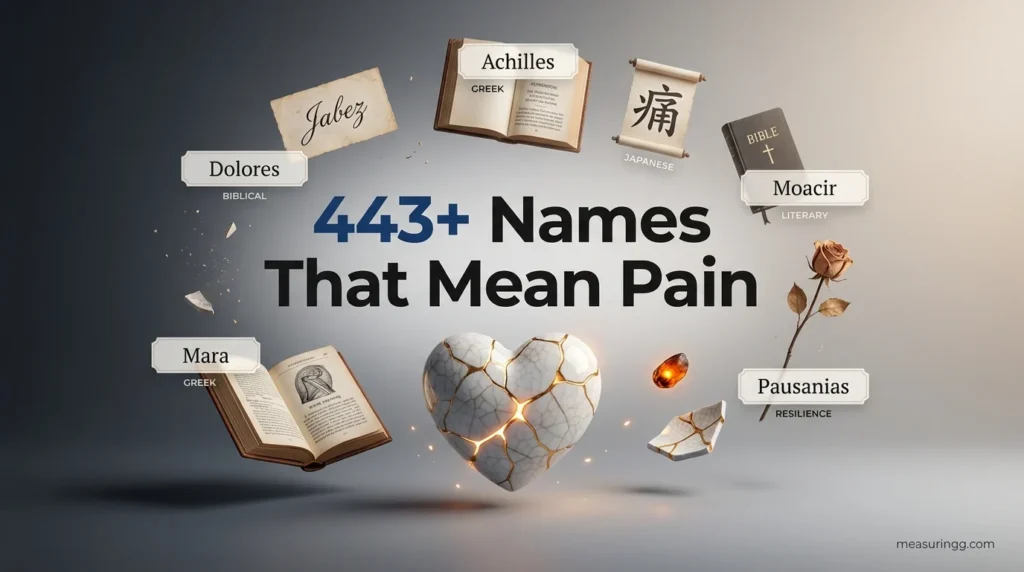
- Jabez — A striking biblical choice traditionally associated with sorrow, but also with a story of blessing and transformation.
- Achilles — A dramatic Greek-associated name connected by some etymological interpretations with pain or distress.
- Mara — A concise biblical name associated with bitterness, making it suitable for a darker literary aesthetic.
- Dolores — A traditional name associated with sorrows, especially through the Spanish devotional title María de los Dolores.
- Moacir — A rare Brazilian literary name traditionally derived from a Tupi expression associated with pain, regret, and grief.
How to use the 443+ suggestions
The list below intentionally mixes several naming categories. A literal name has a relatively strong historical or linguistic connection to pain or sorrow. An associated name evokes grief, bitterness, hardship, mourning, darkness, or emotional weight. A creative name is an original naming suggestion designed for fictional characters, usernames, teams, stories, projects, or other non-legal uses.
This approach is especially useful because words for pain differ dramatically between languages. Ancient Greek, for instance, has words such as álgos for pain, sorrow, trouble, grief, and distress, while odýnē can refer to pain, sorrow, or anguish. Greek lýpē likewise covers sorrow, grief, pain, and distress.
443+ master name bank
- Acheron — Creative/literary; dark underworld association.
- Achillea — Literary variant inspired by Achilles.
- Achilleus — Ancient Greek form associated with Achilles.
- Achillia — Feminine historical form associated with Achilles.
- Achillios — Greek-inspired masculine form.
- Achlys — Mythological darkness and sorrow association.
- Adara — Dark, elegant creative association.
- Aderyn — Literary, melancholy sound.
- Adira — Strong, dramatic modern choice.
- Adriel — Reflective biblical-style choice.
- Aeloria — Creative; wistful tone.
- Aelric — Creative; solemn tone.
- Aeron — Welsh-associated literary choice.
- Aestra — Creative; mysterious tone.
- Aethon — Classical-inspired dark choice.
- Ailith — Vintage, melancholy-sounding choice.
- Aisling — Irish-associated dream or vision name.
- Alaric — Historic, serious, dramatic name.
- Alastor — Greek mythological-inspired dark name.
- Althea — Classical name with healing associations.
- Amara — Elegant name with several possible linguistic traditions.
- Ambrose — Traditional, solemn, literary choice.
- Amias — Soft, old-world literary name.
- Anara — Creative sorrow-inspired choice.
- Anax — Ancient Greek-inspired name.
- Andromache — Classical literary name associated with tragic mythology.
- Ania — Short creative choice inspired by sorrow-related vocabulary.
- Anima — Latin-inspired “soul” association.
- Anwen — Welsh-associated literary name.
- Ariadne — Greek mythological name with tragic literary associations.
- Arion — Classical literary choice.
- Arista — Elegant dramatic option.
- Artemia — Classical-inspired feminine choice.
- Arden — Literary and atmospheric.
- Arlen — Modern unisex option.
- Arwyn — Welsh-inspired literary option.
- Asher — Useful contrast name associated with happiness rather than pain.
- Ashen — Creative; faded or sorrowful imagery.
- Ashara — Creative; dark romantic-literary tone.
- Astraea — Classical, celestial contrast.
- Atara — Elegant, dramatic choice.
- Aurelia — Bright contrast to darker meanings.
- Avalon — Mythic, mysterious atmosphere.
- Avira — Modern creative suggestion.
- Azara — Dark-aesthetic creative choice.
- Azriel — Biblical-style, solemn sound.
- Briar — Thorn imagery and hardship association.
- Bran — Celtic literary atmosphere.
- Briony — Botanical, bittersweet aesthetic.
- Bronwen — Welsh literary choice.
- Caelan — Modern Celtic-style option.
- Caelia — Classical-inspired choice.
- Caelum — Latin-inspired celestial contrast.
- Calder — Strong, atmospheric surname-style name.
- Calliope — Greek literary association.
- Calista — Elegant contrast to darker themes.
- Calyx — Botanical, unusual option.
- Cassian — Classical, serious name.
- Cassiel — Angelic/literary atmosphere.
- Celandine — Botanical, old-world option.
- Celestine — Heavenly contrast.
- Cerys — Welsh-associated choice.
- Cian — Short Celtic-associated option.
- Circe — Greek mythological choice.
- Clio — Classical literary name.
- Cora — Simple, memorable option.
- Corvin — Raven-associated dark aesthetic.
- Cressida — Classical literary name with tragic associations.
- Cyrene — Ancient Greek-associated choice.
- Damaris — Biblical-era name.
- Damian — Traditional dramatic option.
- Dante — Strong literary association.
- Daria — Elegant, serious choice.
- Darian — Modern literary option.
- Delia — Classical name.
- Delphine — French, refined aesthetic.
- Desdemona — Shakespearean tragic association.
- Desirae — Longing-inspired aesthetic.
- Dorian — Literary and sophisticated.
- Draven — Modern dark-fiction style.
- Drusilla — Ancient Roman/Biblical literary choice.
- Eira — Welsh-associated snow imagery.
- Elara — Mythological/celestial name.
- Elen — Welsh-associated choice.
- Elian — Modern lyrical option.
- Elio — Bright contrast name.
- Elowen — Cornish-associated nature name.
- Elaraine — Creative literary extension.
- Elysia — Elysian contrast to suffering.
- Ember — Resilience-after-fire imagery.
- Emrys — Welsh legendary association.
- Endellion — Cornish literary choice.
- Enid — Welsh literary name.
- Erebus — Greek primordial darkness association.
- Eridan — Classical/celestial-inspired choice.
- Erin — Familiar, simple option.
- Eris — Greek mythological name.
- Esme — Soft, elegant choice.
- Estelle — Star-inspired contrast.
- Eurydice — Greek mythological tragic association.
- Evander — Classical literary name.
- Everard — Old Germanic-style choice.
- Fable — Literary, symbolic option.
- Faelan — Celtic-inspired creative choice.
- Fenris — Norse-inspired dramatic choice.
- Fiora — Floral contrast.
- Freya — Norse mythological choice.
- Gaia — Classical nature association.
- Galen — Ancient Greek-associated name.
- Gareth — Arthurian literary association.
- Genevieve — Romantic literary atmosphere.
- Griselda — Traditional dramatic name.
- Guinevere — Arthurian tragic-romantic association.
- Hades — Mythological underworld association.
- Halia — Soft modern option.
- Halcyon — Peaceful contrast to pain.
- Hecate — Greek mythological association.
- Hel — Norse mythological association.
- Helena — Classical literary choice.
- Hera — Greek mythological name.
- Hermione — Classical literary name.
- Hestia — Greek mythological contrast.
- Ianthe — Greek literary name.
- Icarus — Classical tragic association.
- Idris — Traditional Welsh/Arabic name with different histories.
- Iliana — Lyrical modern choice.
- Imara — Strong modern choice.
- Inara — Elegant contemporary option.
- Indra — Ancient South Asian mythological association.
- Ione — Greek-associated name.
- Iphigenia — Greek tragic literary association.
- Isadora — Classical elegant choice.
- Isolde — Arthurian tragic-romantic association.
- Jabez — Biblical name traditionally associated with sorrow.
- Jasper — Traditional gemstone name.
- Jericho — Biblical place-name choice.
- Jonah — Biblical literary option.
- Judah — Biblical historical choice.
- Julian — Classical, polished option.
- Junia — Biblical-era feminine name.
- Kaia — Short modern option.
- Kairon — Creative time-and-fate aesthetic.
- Kallias — Greek-inspired option.
- Kassandra — Greek mythological tragic association.
- Kestrel — Bird-inspired literary choice.
- Kieran — Irish-associated option.
- Kira — Short, versatile name.
- Lachesis — Greek mythological Fate association.
- Lamia — Greek mythological literary name.
- Lavinia — Classical literary choice.
- Leander — Greek literary tragedy association.
- Lenora — Literary, melancholy atmosphere.
- Leora — Light-themed contrast.
- Lethe — Greek mythological river of forgetfulness.
- Ligeia — Classical literary association.
- Lilith — Ancient literary/mythological association.
- Liora — Bright contrast.
- Lorelei — German literary/folkloric association.
- Lucian — Light-themed contrast.
- Lucinda — Bright, elegant contrast.
- Lysander — Greek literary choice.
- Lyra — Constellation/music association.
- Mara — Biblical name associated with bitterness.
- Maris — Sea-inspired literary choice.
- Marisol — Spanish literary-style choice.
- Melaina — Greek-inspired dark association.
- Melanthos — Greek-inspired dark floral choice.
- Melinoe — Greek mythological underworld-associated figure.
- Melora — Creative lyrical choice.
- Mercy — Strong contrast to suffering.
- Merope — Greek mythological name.
- Micaiah — Biblical name.
- Mireille — French literary elegance.
- Morgana — Arthurian literary association.
- Morrigan — Celtic mythological association.
- Morwen — Welsh-inspired literary choice.
- Myrrh — Ancient aromatic symbolism.
- Narcissa — Classical literary choice.
- Nerissa — Shakespearean literary association.
- Niamh — Irish-associated name.
- Noctis — Latin-inspired night name.
- Nox — Latin-inspired night association.
- Nyx — Greek primordial night.
- Odessa — Literary/geographic atmosphere.
- Odysseus — Greek epic association.
- Odile — Literary European choice.
- Odran — Celtic-associated choice.
- Odessaine — Creative literary extension.
- Olenna — Elegant fantasy-style option.
- Ophelia — Shakespearean tragic association.
- Orpheus — Greek mythological literary choice.
- Orlaith — Irish-associated option.
- Pandora — Greek mythological choice.
- Persephone — Greek mythological underworld association.
- Phobos — Greek mythological fear association.
- Phaedra — Greek tragic literary association.
- Pallas — Classical mythological choice.
- Pausanias — Ancient Greek name traditionally associated with “reliever of sorrow.”
- Penelope — Greek literary name.
- Philomela — Greek mythological tragic association.
- Priam — Trojan literary association.
- Proserpina — Roman form associated with Persephone.
- Raven — Dark literary symbolism.
- Ravena — Creative raven-inspired choice.
- Regret — Experimental literary concept-name.
- Remiel — Angelic/literary-inspired choice.
- Renata — Renewal contrast.
- Rhea — Greek mythological choice.
- Rowan — Nature-inspired name.
- Rune — Mystical literary option.
- Sable — Dark color-inspired choice.
- Salem — Literary and atmospheric place-name.
- Selene — Greek moon association.
- Seraphine — Angelic contrast.
- Seren — Welsh-associated star name.
- Severin — Latin/Romance traditional option.
- Shadow — Creative character name.
- Shale — Earthy literary option.
- Shion — Japanese-associated modern name form.
- Sigrun — Norse-inspired choice.
- Silas — Biblical literary name.
- Silene — Botanical/classical choice.
- Soleil — Bright French contrast.
- Solenne — French-inspired elegant choice.
- Sorrowyn — Creative literary construction.
- Sorrel — Botanical, bittersweet aesthetic.
- Styx — Greek mythological river.
- Sylvaine — Forest-inspired French-style choice.
- Talia — Lyrical modern option.
- Thanatos — Greek mythological personification.
- Themis — Greek mythological justice association.
- Thalia — Classical literary choice.
- Theodora — Traditional Greek-derived choice.
- Titania — Shakespearean literary association.
- Tristan — Arthurian tragic-romantic association.
- Umbra — Latin-inspired shadow name.
- Valerian — Ancient Roman-style choice.
- Vesper — Evening-star/evening association.
- Vespera — Creative extension.
- Viola — Shakespearean literary name.
- Viridian — Color-inspired creative name.
- Wren — Bird-inspired concise choice.
- Wraith — Fictional character-style name.
- Xanthe — Greek-associated name.
- Xenia — Greek-associated hospitality name.
- Yara — Cross-cultural modern choice.
- Yvaine — Literary/fantasy-associated choice.
- Zephyr — Greek wind association.
- Zora — Dawn-inspired contrast.
- Zorina — Dawn-inspired creative choice.
- Acedia — Literary term-inspired character name.
- Acorin — Creative pain-inspired name.
- Adven — Creative hardship-inspired name.
- Agnora — Creative sorrow-inspired name.
- Alven — Creative literary name.
- Amaris — Modern lyrical choice.
- Anora — Elegant creative option.
- Arvella — Creative vintage option.
- Aveline — French-style literary choice.
- Belaine — Creative melancholy name.
- Belladore — Creative dramatic name.
- Caelith — Fantasy-style literary name.
- Caldris — Creative dark name.
- Cendre — French-inspired ash imagery.
- Cerelia — Classical-style creative name.
- Coraline — Literary/botanical atmosphere.
- Corvella — Raven-inspired creative name.
- Delyra — Creative lyrical name.
- Drevia — Creative dark-aesthetic choice.
- Elaris — Fantasy-style name.
- Elvara — Creative solemn name.
- Emberlyn — Ember-inspired modern name.
- Evadne — Classical literary association.
- Faylen — Creative modern option.
- Gwyndra — Welsh-inspired fantasy name.
- Havelyn — Creative atmospheric name.
- Ilyra — Creative lyrical name.
- Ismera — Creative old-world name.
- Jorren — Creative masculine choice.
- Kaelith — Fantasy-style masculine name.
- Kavira — Creative modern choice.
- Lorien — Literary/fantasy atmosphere.
- Maelis — French-style modern option.
- Maevra — Creative Celtic-style choice.
- Mavren — Creative dark masculine name.
- Nerith — Fantasy-style option.
- Orelith — Creative literary name.
- Raviel — Creative angelic-dark contrast.
- Riven — Literary association with something divided or broken.
- Saelith — Creative fantasy name.
- Serevin — Creative solemn masculine choice.
- Soraya — Established given name with an elegant sound.
- Sorven — Creative sorrow-inspired masculine option.
- Tavren — Creative dramatic choice.
- Vaelin — Fantasy-style literary option.
- Varelle — Creative feminine option.
- Velorin — Creative solemn name.
- Veyra — Modern creative choice.
- Weylin — Creative literary name.
- Xavren — Creative masculine option.
- Ysolde — Variant inspired by Isolde.
- Zarev — Creative dramatic masculine option.
- Zelora — Creative lyrical feminine choice.
- Agnella — Creative solemn option.
- Altheon — Creative classical masculine form.
- Ansel — Traditional literary option.
- Ardena — Feminine literary extension.
- Aureon — Bright creative contrast.
- Braven — Resilience-oriented creative name.
- Caelum — Celestial Latin-inspired choice.
- Daven — Short modern option.
- Elarion — Creative fantasy name.
- Eryndor — Creative literary masculine name.
- Faelora — Creative lyrical feminine name.
- Galenor — Creative classical-style name.
- Hespera — Evening-inspired feminine option.
- Iveron — Creative masculine choice.
- Kaelora — Creative feminine option.
- Lunara — Moon-inspired modern name.
- Mireon — Creative masculine option.
- Nerissa — Literary established name.
- Ophira — Creative elegant name.
- Ravena — Raven-inspired option.
- Selora — Creative lyrical name.
- Thalora — Creative classical-style name.
- Virelia — Creative feminine name.
- Ylena — Creative modern option.
- Zavira — Creative dramatic choice.
- Avelor — Creative masculine name.
- Cyralis — Creative literary option.
- Doriane — Feminine literary extension.
- Elvaira — Creative atmospheric name.
- Ilyth — Minimal fantasy-style choice.
- Maeron — Creative masculine option.
- Nayvera — Creative feminine option.
- Orlena — Vintage-inspired choice.
- Rhaelin — Creative fantasy name.
- Sorelia — Sorrow-inspired creative construction.
- Vaelora — Creative fantasy-style feminine name.
- Veylan — Creative masculine choice.
- Zelith — Creative minimalist name.
- Arielle — Established lyrical option.
- Blythe — Joyful contrast to the theme.
- Celine — Elegant celestial-associated choice.
- Dahlia — Botanical dramatic option.
- Elise — Familiar elegant name.
- Faye — Short literary/fairy-associated choice.
- Greta — Traditional European option.
- Hazel — Botanical vintage name.
- Iris — Botanical Greek-associated name.
- Juno — Roman mythological choice.
- Kara — Simple modern option.
- Lena — Familiar international choice.
- Mabel — Vintage option.
- Nora — Short classic name.
- Olive — Botanical contrast.
- Pearl — Gemstone-inspired option.
- Quinn — Modern unisex choice.
- Rose — Classic floral contrast.
- Sage — Nature-inspired modern option.
- Tess — Short literary choice.
- Una — Short traditional option.
- Vera — Classic concise name.
- Willa — Vintage literary choice.
- Xena — Modern mythic-sounding option.
- Yvette — Traditional French-associated option.
- Zelda — Literary/fantasy atmosphere.
The master bank deliberately contains a mixture of historical names, mythological names, established international names, literary names, and creative constructions. That distinction should be preserved if you publish the list, because presenting an invented name as an ancient translation would make the article less trustworthy.
Names That Mean Pain in Japanese
Japanese naming requires extra care because a Japanese word meaning “pain” is not automatically a conventional personal name. For example, 痛苦 (tsūku) refers to intense pain or anguish, with the kanji 痛 associated with pain/hurt and 苦 associated with suffering, hardship, worry, or bitterness.
For that reason, the following suggestions are best treated as Japanese-inspired, literary, kanji-based, or thematic ideas, rather than claims that all are conventional Japanese given names.
- Itami — Japanese word associated with pain; strongest direct thematic choice.
- Ku — A compact creative concept based on the kanji for suffering.
- Kutsū — Pain or painful sensation; better as a literary concept than an everyday given name.
- Tsūku — A Japanese word associated with anguish or great pain.
- Itamiko — Creative name construction inspired by itami.
- Kurumi — Established Japanese name with a very different conventional meaning; useful when sound matters more than literal pain.
- Kanashimi — Japanese word for sadness; more natural as a thematic word than a personal name.
- Setsuna — A Japanese-associated name with a fleeting, bittersweet literary feeling.
- Yūrei — Ghost/spirit imagery; best suited to fiction rather than ordinary naming.
A useful SEO distinction is “Japanese names associated with pain” rather than claiming that every Japanese name on a list literally means pain. This is more linguistically defensible and gives readers clearer expectations.
Girl Names That Mean Pain
Girl names connected with pain often work best when the meaning is interpreted through sorrow, grief, bitterness, longing, tragedy, or resilience. They can be especially effective for fictional characters because the emotional meaning creates immediate atmosphere.
- Dolores — Associated with sorrows.
- Mara — Traditionally associated with bitterness.
- Addolorata — Associated with grief or sorrow.
- Dolora — Literary variation connected with Dolores.
- Dores — Portuguese/Galician form associated with Dolores.
- Dolors — Catalan form associated with Dolores.
- Sorrow — Experimental English concept-name.
- Melaina — Dark, Greek-inspired aesthetic.
- Achlys — Mythological darkness and sorrow association.
- Angrboða — Norse mythological name meaning “she who brings grief.”
Among these, Dolores is one of the clearest established examples. Achlys and Angrboða are much more mythological, while “Sorrow” belongs to the experimental/literary category.
Boy Names That Mean Pain
Masculine names associated with pain tend to come from biblical, classical, mythological, or literary traditions. Some are literal, while others have become pain-associated because of the stories attached to their bearers.
- Jabez — Traditionally “sorrow” in Hebrew.
- Achilles — Sometimes connected with Greek achos, pain or distress, although the etymology is uncertain.
- Moacir — Traditionally associated with pain, regret, and grief.
- Pausanias — Associated with “reliever of sorrow.”
- Ajax — Sometimes connected with a Greek word for mourner, though its etymology is debated.
- Orpheus — Strong Greek tragic-literary association.
- Tristan — Long associated with tragic romance.
- Priam — Trojan literary association with loss and suffering.
- Icarus — Classical tragic association.
- Thanatos — Greek mythological association with death; best reserved for fiction or symbolic use.
The important point is that “associated with pain” is not the same as “literally means pain.” Achilles is a particularly good example: reference works note a possible connection to achos, but the etymology is not settled.
Names That Mean Pain and Suffering Male
If you want a male name with a particularly heavy emotional or historical atmosphere, look beyond the single word “pain.” Sorrow, grief, mourning, hardship, distress, and endurance can create a much wider naming palette.
- Jabez — Biblical sorrow association.
- Moacir — Pain, regret, and grief association.
- Achilles — Pain/distress association in one proposed etymology.
- Pausanias — Reliever of sorrow.
- Ajax — Possible mourner association.
- Orpheus — Tragic Greek literary figure.
- Leander — Classical tragic-love association.
- Odysseus — Epic hardship and endurance association.
- Dante — Literary intensity and suffering-associated atmosphere.
The word grief itself has an interesting history: English grief originally referred to hardship, suffering, pain, or bodily affliction before developing its strong modern association with emotional sorrow. That makes historical names connected with hardship especially relevant when building a broader list.
Last Names That Mean Pain and Suffering
Surnames are different from given names because many developed from occupations, locations, nicknames, physical descriptions, ancestors, or historical events. Consequently, a surname that sounds dark does not necessarily translate literally to “pain.”
For fictional families, however, surname-style constructions can provide the exact atmosphere you need.
- Graven — Literary surname suggesting gravity or solemnity.
- Sorrowell — Creative surname construction.
- Grieford — Creative surname suggesting grief.
- Mournvale — Fantasy surname.
- Ashbourne — Ash-and-place imagery.
- Ravenwood — Dark literary surname.
- Blackmere — Dark-water imagery.
- Thornwell — Thorn and resilience imagery.
- Duskryn — Creative surname with a somber tone.
For real genealogy, verify the historical etymology separately. A surname database may distinguish between an established surname meaning and a user-created or literary surname, and that distinction should never be hidden from readers.
Boy Names That Mean Pain and Suffering in the Bible
The Bible offers some of the strongest examples of names connected to sorrow, bitterness, mourning, hardship, and difficult circumstances. Yet even here, caution is essential: not every biblical character who experienced suffering had a name whose etymology means suffering.
Jabez is the clearest example in this category. Reference sources traditionally explain Jabez as “sorrow,” and the biblical account connects the name with the circumstances surrounding his birth.
- Jabez — Traditionally “sorrow.”
- Ben-Oni — Biblical name associated with “son of my sorrow.”
- Ichabod — Traditionally connected with the departure of glory.
- Mara — “Bitter”; used by Naomi in Ruth after profound family loss.
- Abel — Associated in older naming dictionaries with mourning or breath/vapor; interpretation varies.
- Jemuel — Biblical name with a solemn historical setting.
- Job — Famous biblical figure associated with suffering, though the name itself should not automatically be translated as “pain.”
- Jonah — Biblical figure whose story contains hardship and distress.
- Jeremiah — Prophet strongly associated with lament and grief in biblical literature.
Older Bible-name dictionaries contain thousands of entries, but some historical explanations remain debated. Modern readers should therefore distinguish the meaning of a name from the emotional story of its biblical bearer.
Greek Names That Mean Pain
Greek is one of the richest languages for researching this topic because several ancient Greek words express pain, sorrow, grief, distress, trouble, and anguish. The word álgos, for example, can refer to pain of body or mind as well as sorrow, trouble, grief, distress, or woe.
- Achilles — Possible connection to achos, pain or distress.
- Achlys — Mythological darkness and sorrow.
- Pausanias — “Reliever of sorrow.”
- Ajax — Possibly connected with a word for mourner.
- Odynes — Creative form inspired by odýnē, pain or sorrow.
- Lypē — Creative name inspired by Greek lýpē, sorrow or grief.
- Algos — Directly inspired by Greek álgos, pain.
- Odynē — Directly inspired by Greek odýnē, pain or anguish.
- Achos — Directly inspired by Greek achos, distress or grief.
The final three are particularly important to label as Greek vocabulary-inspired names, not automatically conventional modern Greek given names. Greek odýnē is documented as “pain, sorrow,” while lýpē can mean sorrow, grief, pain, and distress.
Girl Names That Mean Broken Soul
“Broken soul” is primarily a poetic concept, not a standard dictionary meaning attached to hundreds of historical personal names. For characters, usernames, stories, or creative projects, however, names can suggest this idea through darkness, loss, longing, solitude, or healing.
- Eurydice — Tragic Greek literary association.
- Ophelia — Shakespearean tragic association.
- Desdemona — Shakespearean tragic-literary choice.
- Isolde — Arthurian tragic-romantic association.
- Phaedra — Greek tragic-literary association.
- Melinoe — Underworld-associated Greek mythological figure.
- Persephone — Underworld and transformation symbolism.
- Achlys — Darkness and sorrow association.
- Lenora — Literary melancholy aesthetic.
These names work particularly well when you want emotional depth without using an explicitly negative word. A character called Persephone, for example, can suggest descent, transformation, return, and renewal rather than simply sadness.
Names Associated With Grief, Mourning, and Loss
Pain-related naming does not have to be literal. Some of the most memorable options come from the broader emotional vocabulary surrounding grief and mourning.
- Angrboða — “She who brings grief.”
- Dolores — Sorrows.
- Dolors — Catalan form of Dolores.
- Dores — Portuguese/Galician form of Dolores.
- Addolorata — Grieving/sorrowful association.
- Mara — Bitterness.
- Jabez — Sorrow.
- Moacir — Pain, regret, grief.
- Achlys — Mythological sorrow/darkness.
This category is particularly useful for readers who searched for “names that mean grief,” “names that mean sorrow,” or “names associated with loss” rather than the exact phrase “names that mean pain.”
Dark and Mysterious Names Inspired by Pain
Dark names can create atmosphere without making the meaning excessively literal. For fiction, gaming characters, fantasy worlds, or creative projects, sound and imagery may matter as much as etymology.
- Erebus — Primordial Greek darkness.
- Nyx — Greek primordial night.
- Nox — Latin-inspired night name.
- Styx — Greek mythological river.
- Umbra — Latin-inspired shadow.
- Raven — Dark bird symbolism.
- Sable — Dark color association.
- Vesper — Evening atmosphere.
- Noctis — Night-inspired literary construction.
The strongest choices here are short, pronounceable, and visually distinctive. That makes names such as Nyx, Nox, Vesper, Raven, and Sable especially effective for fictional or digital contexts.
Names That Represent Hardship but Also Strength
A name connected with pain does not have to celebrate suffering. It can represent survival, endurance, recovery, courage, or transformation.
- Braven — Creative resilience-oriented name.
- Valerian — Strong historical atmosphere.
- Everard — Traditional sturdy sound.
- Ember — Surviving fire imagery.
- Phoenix — Rebirth symbolism.
- Renata — Renewal association.
- Asher — Joyful contrast to hardship.
- Mercy — Compassion as a response to suffering.
- Seraphine — Angelic, uplifting contrast.
This is often the best naming strategy when the intended story involves a character who has endured difficulty but is not defined by it.
Aesthetic Names That Feel Sad, Soft, and Poetic
Not every reader wants a name whose dictionary meaning is literally painful. Sometimes they want a name that simply sounds melancholy.
- Aeloria — Soft fantasy aesthetic.
- Elowen — Nature-inspired lyrical quality.
- Liora — Light-oriented contrast.
- Virelia — Elegant creative construction.
- Sorelia — Original sorrow-inspired construction.
- Yvaine — Fantasy-literary atmosphere.
- Elaris — Soft invented fantasy style.
- Lunara — Moonlit atmosphere.
- Solenne — Refined, solemn sound.
For aesthetic naming, prioritize phonetics: open vowels, softer consonants, and longer syllables often create a more lyrical impression than harsh, clipped sounds.
Cool Names That Mean Pain or Carry a Dark Edge
Cool names usually need to be short, memorable, and visually strong. They can work for characters, gaming profiles, fictional groups, creative brands, or story titles.
- Nyx — Night-inspired.
- Nox — Night-inspired.
- Vex — Creative, sharp-edged option.
- Riven — Broken/divided imagery.
- Ashen — Faded or ash-like imagery.
- Corvin — Raven-inspired atmosphere.
- Draven — Modern dark-fiction style.
- Vesper — Evening atmosphere.
- Styx — Mythological underworld association.
These names demonstrate an important principle: a name can communicate mood without making an unsupported etymological claim.
How to Choose the Right Pain-Related Name
The best name depends on what you actually want the reader, player, character, audience, or community to feel.
If you want historical credibility, choose names such as Jabez, Dolores, Moacir, or Pausanias and explain the etymology carefully.
If you want Greek mythology, Achilles, Achlys, Orpheus, Persephone, Phaedra, and Eurydice provide much richer storytelling possibilities.
If you want a Biblical atmosphere, Jabez and Mara are among the strongest choices, with the important caveat that Mara means “bitter,” not literally “pain.” Reference material specifically connects Mara with Naomi’s statement in Ruth 1:20.
If you want a fictional dark name, consider Umbra, Nyx, Nox, Riven, Sable, Ashen, or one of the clearly labeled creative constructions.
If you want a positive interpretation, use a name that represents what comes after pain: renewal, strength, mercy, light, endurance, or transformation.
A practical 2026 name-selection score
For a more advanced approach, score each candidate from 1–5 in these five areas:
- Meaning accuracy — Is the claimed meaning directly supported?
- Emotional fit — Does the name communicate the desired mood?
- Pronunciation — Can ordinary readers say it easily?
- Memorability — Is it distinctive without being confusing?
- Context fit — Does it suit a baby, character, username, team, story, or business?
A name with a 5/5 emotional score but a 1/5 meaning-accuracy score should be described as creative or associated, not as a literal translation.
2026 Naming Trends: What Makes a Pain-Related Name Stand Out?
A useful 2026 approach is moving away from huge unfiltered lists and toward meaning transparency.
Readers increasingly benefit from knowing whether a name is:
- Literal — The historical meaning directly relates to pain, sorrow, grief, or suffering.
- Associated — The name is connected to a story, myth, character, or concept involving suffering.
- Linguistic — The suggestion comes from a word in another language rather than a conventional personal name.
- Literary — The name carries emotional meaning through literature or mythology.
- Creative — The name is newly constructed and should not be presented as ancient or traditional.
That five-part classification is more useful than simply putting every dark-sounding word into one list.
It also solves a common problem with name articles: false precision. A name can sound as though it means “pain” while its actual etymology is uncertain. Achilles is an excellent example because reputable name references acknowledge a possible connection to achos while also noting uncertainty.
Similarly, the existence of a Greek word meaning pain does not automatically mean that word was historically used as a personal name. Greek vocabulary such as álgos, odýnē, and lýpē is useful for linguistic inspiration, but should be labeled accordingly.
For SEO, this distinction is valuable because it lets one article naturally answer several closely related searches:
- Names that mean pain
- Names that mean sorrow
- Names that mean grief
- Names that mean suffering
- Names associated with pain
Instead of mechanically repeating one keyword, the article can satisfy the reader’s broader intent.
Final Guide: The Best Names for Different Uses
If you are choosing a name for a fictional character, prioritize story relevance over literal translation. Achilles, Eurydice, Ophelia, Orpheus, Persephone, Tristan, and Iphigenia can immediately evoke classical or tragic storytelling traditions.
For a baby name, be considerably more cautious. A name whose literal meaning is strongly associated with pain may carry an unintended emotional burden. A name connected with strength after hardship can communicate a similar story while remaining more positive.
For a username, short options usually perform better. Nyx, Nox, Vesper, Riven, Raven, Sable, and Ashen are visually distinctive.
For a fantasy character, creative constructions such as Aeloria, Vaelora, Sorelia, Corvella, and Elarion can work well because the goal is atmosphere rather than historical accuracy.
For a team or group name, a pain-related concept can become more empowering when framed around overcoming difficulty. Names built around resilience, endurance, rebirth, ashes, storms, or transformation generally create a stronger group identity than simply using a word for suffering.
For a business or professional project, avoid choosing a name purely because it literally means pain unless the concept is intentional. Emotional clarity, pronunciation, spelling, domain availability, trademark considerations, and audience interpretation all matter.
Most importantly, don’t confuse darkness with depth. A sophisticated name does not have to be grim. The strongest name can be one that acknowledges hardship while pointing toward strength, healing, wisdom, courage, or renewal.
Quick shortlist
- Best literal biblical choice: Jabez
- Best traditional sorrow-associated feminine choice: Dolores
- Best bitterness-associated biblical choice: Mara
- Best Greek-associated choice: Achilles
- Best rare literary choice: Moacir
- Best sorrow-relief choice: Pausanias
- Best mythological dark choice: Achlys
- Best short dark choice: Nyx
- Best modern literary choice: Riven
- Best resilience concept: Ember
Final thought
A great name should do more than match a keyword. It should tell a small story.
The word “pain” can represent physical discomfort, emotional sorrow, grief, hardship, regret, longing, or the difficult experiences that shape a person. Different languages encode those ideas differently, which is why a serious name guide should not pretend that every suggestion has one exact translation.
For example, Hebrew mak’ov is documented in biblical lexicon material with the range pain, sorrow, and suffering, including both physical and mental pain. Ancient Greek similarly contains several distinct terms covering pain and grief.
That gives you a much richer naming palette than simply searching for the English word “pain.”
If the goal is a name with historical meaning, use the strongest documented examples and explain their origins. If the goal is a fictional identity, use mythology, symbolism, sound, and imagery. And if the goal is a name representing someone who has experienced hardship, consider choosing a word that communicates what they became because of it, rather than only what they endured.