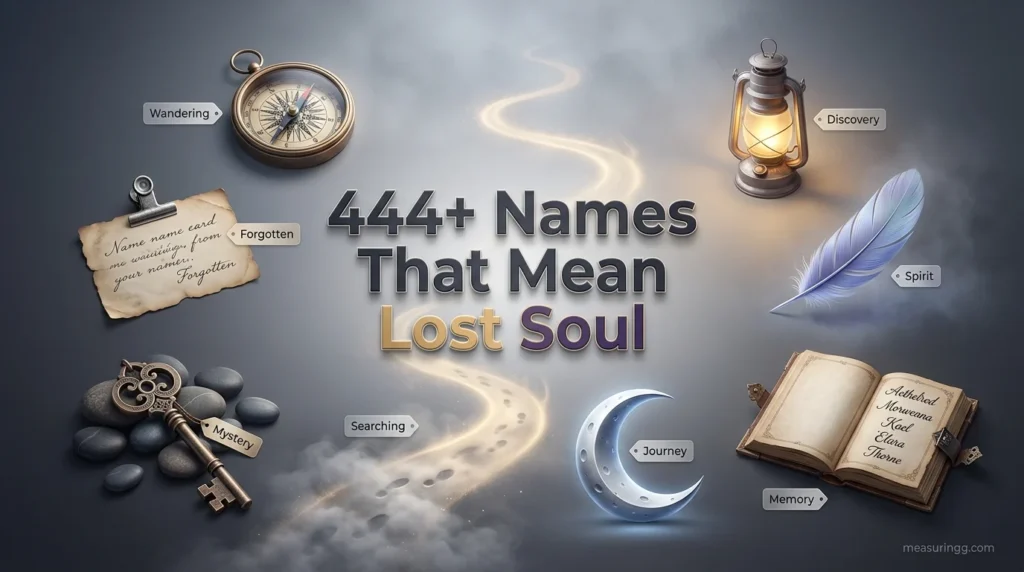
If you are searching for a name that feels mysterious, wandering, forgotten, soulful, or quietly otherworldly, this guide gives you a much broader choice than a basic “names that mean lost” list. Rather than treating lost soul as one literal dictionary definition, the names below are organized around related ideas such as wandering, exile, solitude, forgetfulness, mystery, spiritual searching, drifting, and ghostly folklore.
One important distinction makes this list more useful: very few established personal names literally translate to “lost soul.” Names such as Perdita genuinely connect to “lost,” while Lethe is associated with forgetfulness in Greek mythology. Other choices have a symbolic connection through mythology, literature, words, places, or stories of wandering and separation. For Japanese terms in particular, a dictionary word describing a ghost or wandering spirit should not automatically be presented as an ordinary Japanese baby name.
The result is a flexible collection for fictional characters, usernames, creative projects, pets, teams, online communities, stories, and people looking for an unusual name with emotional depth.
Top 5 Trending Name Picks for 2026
Here are five especially memorable choices to start with:
- 🌙 Perdita — one of the strongest established literary connections to “lost.”
- 🕯️ Lethe — associated with forgetfulness and the mythological river of oblivion.
- 🧭 Peregrine — evokes a traveler, pilgrim, or person continually on a journey.
- 🌫️ Mayoi — a Japanese word associated with being lost, uncertain, or astray; better suited to creative use than as a conventional given name.
- ✨ Wander — a modern English word-name with an immediately recognizable drifting or searching quality.
How to interpret “lost soul” names
There are several different ways a name can fit this theme:
Literal: The name itself has a meaning connected with being lost or forgotten.
Mythological: The name belongs to a character, spirit, deity, place, or story associated with wandering or separation.
Symbolic: The name evokes solitude, distance, twilight, mystery, memory, or searching.
Creative: A newly combined or stylized name is designed to communicate a lost-soul aesthetic without claiming that the word has an ancient dictionary meaning.
That distinction matters because many online lists incorrectly assign dramatic meanings to ordinary names. For example, Selene means “moon,” not literally “lost soul,” while Perdita is genuinely derived from Latin perditus, “lost.”
Last Names That Mean Lost Soul
Surnames rarely translate literally to “lost soul.” Instead, the strongest surname-style choices use imagery involving wandering roads, forgotten places, mist, dusk, ravens, forests, and distant landscapes. Some below are established surnames or surname-like words; others are intentionally creative combinations for fiction, gaming, or branding.
- Ashford, Ashby, Ashcombe, Ashdown, Ashmere, — ash and landscape imagery with an old-world atmosphere.
- Holloway, Hollowell, Hollowell, Hollowbrook, Hollowmere, — evokes an empty road, secluded valley, or forgotten place.
- Wander, Wanders, Wanderley, Wanderford, Wandermere, — direct traveler imagery; particularly suitable for fictional surnames.
- Ravenwood, Ravenscroft, Ravenmere, Ravenhall, Ravencroft, — gothic literary imagery without requiring a literal “lost” translation.
- Greywood, Greymere, Greyford, Greyvale, Greystone, — muted, distant landscape imagery.
- Mistwood, Mistvale, Mistbrook, Mistmere, Mistford, — useful for fantasy characters or atmospheric usernames.
- Duskwood, Duskmere, Duskvale, Duskford, Duskhollow, — evening and fading-light imagery.
- Thornwood, Thornvale, Thornmere, Thornfield, Thornbrook, — suggests a difficult road or isolated landscape.
- Falloway, Fallowmere, Fallowbrook, Fallowfield, Fallowford, — “fallow” imagery suggests an unused or quiet landscape.
Best use: For a realistic family surname, verify the historical origin separately. For a fictional character, these surname forms give you much more creative freedom.
Names That Mean Lost Soul in Japanese
Japanese requires special care because a Japanese word, phrase, yokai term, or kanji combination is not automatically a personal name. For example, yūrei (幽霊) refers to a ghost or spirit of the dead in Japanese cultural contexts, while mayoi (迷い) conveys ideas such as being lost, uncertainty, or wandering. The International Research Center for Japanese Studies explains that yūrei has a long literary and cultural history connected with spirits of the dead who linger or seek release.
For that reason, the following are best viewed as Japanese-inspired vocabulary and character-name concepts, not a claim that every item is a conventional Japanese given name.
- Mayoi, Mayo, Mayou, Mayoiha, Mayoka — inspired by mayoi, associated with being lost, uncertain, or astray.
- Tamashii, Tama, Tamashi, Tamaya, Tamaki — built around tamashii (魂), “soul” or “spirit,” with varying name-like forms.
- Rei, Reika, Reito, Reiya, Reiko — rei can carry several meanings depending on kanji; one relevant association is spirit.
- Yūrei, Yurei, Yūra, Yura, Yureka — centered on the cultural idea of the ghostly spirit; best reserved for fiction.
- Hagure, Hagureru, Hagureta, Hagureki, Hagureto — inspired by hagure, suggesting something separated or stray.
- Tasogare, Tasoga, Tasoru, Tasora, Tasoki — inspired by tasogare, “twilight,” a strong metaphor for transition and uncertainty.
- Kage, Kageya, Kageno, Kageru, Kageha — kage can mean “shadow,” depending on context and kanji.
- Kasumi, Kasuma, Kasumiya, Kasuto, Kasuha — kasumi is associated with mist or haze, creating a softer lost-in-the-distance feeling.
- Tobari, Tobara, Tobane, Tobariya, Tobaru — inspired by tobari, a curtain or veil, useful as imagery for a boundary between worlds.
2026 naming note: If authenticity matters, choose an actual Japanese name based on its intended kanji rather than translating an English phrase word-for-word. Japanese names can change meaning substantially when different kanji are used.
Names That Mean Lost Soul Girl
For a feminine lost-soul aesthetic, the strongest names tend to combine soft sounds with themes of wandering, mythology, memory, distance, or mystery. Some have direct etymological connections; others work because of their literary or mythological associations.
- Perdita, Lorna, Soledad, Peregrina, Calypso — lost, forlorn, solitude, traveler, and concealment-related associations.
- Lethe, Leto, Suha, Hulda, Runa — forgetfulness, hiddenness, secrecy, or mystery-related associations.
- Ariadne, Dido, Isolde, Desdemona, Calypso — mythological and literary women whose stories carry separation, tragedy, concealment, or wandering.
- Ondine, Vesper, Lenore, Melinoe, Morrigan — atmospheric names connected to water folklore, evening, literature, mythology, or spirits.
- Wanda, Saira, Sojourner, Journey, Odessa — travel and journey imagery.
- Echo, Mirage, Haze, Mist, Whisper — modern symbolic choices for something distant or difficult to grasp.
- Astraea, Elara, Lyra, Selene, Vespera — celestial choices that suggest distance, night, searching, or the unknown.
- Nerissa, Thalassa, Marina, Darya, Ondine — water-associated choices that work beautifully for a drifting or wandering theme.
- Isolde, Lenora, Morwen, Eira, Briar — literary, atmospheric, and nature-based choices for a darker fairytale character.
A useful distinction: a name can evoke the lost-soul theme without literally meaning it. This is especially important when selecting a real-world name rather than a fictional one.
Names Meaning Lost or Forgotten
This is one of the clearest sections for people who want a name connected directly with loss, forgetfulness, being overlooked, or fading from memory.
The strongest established examples are relatively uncommon. Lethe is associated with forgetfulness in Greek mythology, while Perdita comes directly from the Latin word for “lost.” Suha is listed as an Arabic feminine name meaning “forgotten, overlooked.”
- Perdita, Lethe, Suha, Leto, Manasseh — the strongest choices for direct or traditional forgotten/lost associations.
- Oblio, Oblivion, Remnant, Reliqua, Relic — creative words suggesting something left behind or remembered.
- Forgotten, Faded, Fallow, Vanish, Evan — modern conceptual choices built around disappearance or fading.
- Memory, Memoir, Echo, Refrain, Recall — names inspired by the idea of something surviving through memory.
- Haze, Mist, Fog, Veil, Blur — symbolic names for something difficult to see or remember.
- Lorn, Lorna, Forsaken, Absent, Away — literary and English-language associations with separation or absence.
- Lost, Wander, Rove, Drift, Roam — direct modern word-name choices.
- Remy, Remiel, Remembrance, Remyra, Remara — creative names built around the idea of remembrance.
- Lethea, Lethia, Lethiel, Lethara, Lethira — fantasy-style extensions inspired by Lethe.
Best choice for authenticity: Perdita or Lethe.
Best choice for a modern username: Drift or Wander.
Best choice for fantasy fiction: Lethiel or Lethara.
Male Names That Mean Lost Soul
Male names in this category work especially well when the intended tone is wandering hero, exiled traveler, mysterious stranger, forgotten prince, or solitary adventurer.
- Perdigan, Diggory, Peregrine, Pilgrim, Wander — traveler and lost-path imagery.
- Doran, Ronin, Errant, Exul, Wayfarer — exile, wandering, or journey-related concepts.
- Lorn, Cain, Ishmael, Dido, Aeneas — literary or traditional figures associated with wandering, exile, abandonment, or separation.
- Odysseus, Ulysses, Aeneas, Telemachus, Jason — legendary travelers whose stories center on long journeys.
- Orion, Atlas, Caspian, Evander, Alastair — distant, adventurous, or mythological associations.
- Erebus, Acheron, Hades, Morpheus, Thanatos — mythology-inspired choices for a darker fictional atmosphere.
- Raven, Corvin, Corvus, Rook, Blackbird — bird imagery associated with mystery and distant travel.
- Drift, Rove, Roamer, Quest, Journey — modern word-name options.
- Sol, Solus, Solitary, Peregrin, Nomad — solitude and wandering concepts.
For a real person, softer established names such as Peregrine, Doran, or Evander are generally easier to use than highly literal word choices.
Names That Mean Lost Boy
A “lost boy” name does not necessarily need to sound sad. It can suggest adventure, curiosity, independence, exploration, or a boy finding his way home.
- Wendy, Peter, Lost, Journey, Wander — literary and direct associations with the Lost Boys or wandering.
- Peregrine, Pilgrim, Traveler, Wayfarer, Rover — journey-centered choices.
- Finn, Huck, Scout, Tom, Sawyer — adventurous literary associations.
- Odysseus, Ulysses, Aeneas, Jason, Sinbad — legendary travelers.
- Ronan, Rowan, Orin, Dorian, Caelan — softer choices with wandering or atmospheric character appeal.
- Drift, Rove, Roam, Quest, Trek — contemporary word-name concepts.
- Atlas, Caspian, Everest, Orion, Phoenix — adventurous names associated with distance, exploration, or transformation.
- Milo, Theo, Arlo, Nico, Remy — friendly modern names that can suit a “lost but hopeful” character.
- Waylon, Walker, Ryder, Miles, Journey — names that naturally communicate movement and travel.
For a character who is lost but ultimately hopeful, names such as Journey, Miles, Walker, or Peregrine create a better emotional balance than names built entirely around sadness.
Names That Mean Lost Girl
A lost-girl character can be mysterious without being defined by sadness. The most versatile names suggest a traveler, hidden princess, wanderer, dreamer, stranger, or person searching for home.
- Perdita, Peregrina, Journey, Wander, Sojourner — direct traveler and lost-person imagery.
- Ariadne, Calypso, Dido, Isolde, Desdemona — literary and mythological figures with dramatic stories.
- Lethe, Leto, Hulda, Runa, Gizem — hidden, mysterious, secret, or forgotten associations.
- Echo, Mirage, Mist, Haze, Whisper — soft, elusive imagery.
- Vesper, Vespera, Twilight, Dawn, Duska — transitional time imagery.
- Elara, Lyra, Astraea, Selene, Luna — celestial choices for a distant or dreamlike character.
- Nerissa, Marina, Thalassa, Darya, Ondine — sea-inspired names that evoke drifting.
- Mara, Lenore, Morwen, Briar, Eira — darker literary and natural imagery.
- Faye, Elowen, Anwen, Niamh, Sorcha — fantasy-friendly names with a more graceful, less literal feeling.
If the goal is a beautiful rather than gloomy lost-girl name, Elara, Vesper, Journey, or Peregrina are especially flexible.
Names That Mean Ghost Girl
The word ghost has different cultural meanings, so it is useful to distinguish a literal supernatural term from a name that simply creates a ghostly atmosphere. In Japanese folklore, for example, yūrei refers to spirits of the dead and has a specific historical and theatrical context.
- Yūrei, Rei, Reika, Reiko, Reiya — Japanese-inspired choices built around rei and spirit-related imagery.
- Melinoe, Hecate, Persephone, Morrigan, Circe — mythology-inspired feminine names.
- Echo, Shade, Shadow, Wisp, Whisper — contemporary supernatural imagery.
- Vesper, Nyx, Nocturne, Luna, Selene — night-associated names.
- Mist, Haze, Fog, Veil, Moonmist — ethereal atmospheric concepts.
- Phantom, Spectra, Specter, Apparition, Wraith — direct fictional supernatural vocabulary.
- Eira, Isolde, Lenore, Ophelia, Desdemona — literary names with an appropriately haunting aesthetic.
- Raven, Ravenna, Corvina, Corva, Rook — dark bird imagery.
- Ghostlight, Moonveil, Starshade, Duskwisp, Silverwraith — original fantasy combinations suitable for characters and usernames.
For a real-world name, choose the symbolic group rather than a literal supernatural word if you want something that remains natural in everyday life.
Names That Mean Wandering Soul or Drifting Spirit
“Wandering” is arguably the most useful interpretation of the lost-soul theme because it does not imply that someone is permanently lost. It can instead represent movement, exploration, searching, freedom, and self-discovery.
- Peregrine, Peregrina, Pilgrim, Pilgrima, Wayfarer — travel and pilgrimage imagery.
- Wander, Wanderer, Wandera, Wandrel, Wanderlyn — modern creative forms.
- Rove, Rover, Rovina, Rovan, Rovelle — movement without a fixed destination.
- Drift, Drifter, Drisana, Draven, Dravia — floating or drifting imagery.
- Roam, Roamer, Roma, Romelle, Romira — travel-oriented creative forms.
- Nomad, Nomada, Noma, Nomira, Nomelle — root-inspired wandering concepts.
- Journey, Journi, Journa, Jourielle, Jouren — modern variations on the journey theme.
- Quest, Questa, Questen, Quessa, Questia — searching and discovery imagery.
- Odyssey, Odessia, Odyra, Odella, Odryn — long-journey-inspired creative forms.
Naming insight: “Wandering” often gives a more positive interpretation of “lost” because it leaves room for the character to eventually discover a destination.
Names That Mean Lonely, Solitary, or Searching
Not every lost-soul concept needs supernatural imagery. Sometimes the central idea is simply someone standing apart, searching for belonging, or traveling inward as much as outward.
- Soledad, Sol, Solus, Solara, Solenne — solitude-inspired choices.
- Alone, Alonea, Solitary, Solita, Solenne — direct or creative solitude concepts.
- Searcher, Seek, Seeker, Sera, Soren — names built around searching.
- Quest, Questia, Quester, Quessa, Questen — discovery-oriented names.
- Echo, Reverb, Refrain, Resonance, Chime — something continuing after the original voice disappears.
- Still, Silence, Quiet, Hush, Whisper — subdued and introspective imagery.
- Lone, Lona, Lorne, Lorna, Lonelle — variations inspired by loneliness or lorn imagery.
- Stranger, Foreign, Xenia, Barbara, Peregrine — outsider or stranger-related concepts.
- Seeking, Seekra, Sevara, Sere, Serin — modern creative forms for a character who is still searching.
These names work particularly well for poetry, fiction, fantasy characters, private communities, and aesthetic usernames.
Names That Mean Faded, Hidden, or Forgotten
The idea of something being hidden rather than completely lost creates a softer interpretation. These names are ideal when you want mystery without making the concept feel hopeless.
- Hidden, Hida, Hideo, Hulda, Gizem — hiddenness and mystery-inspired choices.
- Veil, Veila, Veilyn, Velora, Velune — imagery of something concealed.
- Obscura, Obscure, Obscurae, Oscura, Oscelle — hidden or difficult-to-see concepts.
- Secret, Secreta, Sevrin, Sevara, Seraine — mystery-inspired creative choices.
- Mist, Mista, Mistelle, Mistara, Mistren — obscured landscape imagery.
- Haze, Hazelle, Hazen, Hazira, Hazelyn — soft atmospheric imagery.
- Faded, Fadia, Fadelle, Fadira, Faven — fading-inspired creative names.
- Evanesce, Evanessa, Evaniel, Evanora, Evanel — inspired by the idea of gradually disappearing.
- Lethia, Lethara, Lethiel, Lethea, Lethira — fantasy names inspired by the Lethe/forgetfulness concept.
These are particularly useful for fantasy fiction, where a name can be deliberately symbolic rather than historically established.
Cool Names That Mean Lost Soul
A cool name does not have to sound gloomy. For usernames, gaming characters, creative teams, and fictional protagonists, the strongest choices often combine short spelling, memorable sounds, and an unmistakable atmosphere.
- Drift, Rove, Roam, Quest, Nomad — minimalist adventure energy.
- Vesper, Nyx, Echo, Shade, Wisp — short, atmospheric choices.
- Raven, Rook, Corvus, Onyx, Sable — dark natural imagery.
- Haze, Mist, Veil, Dusk, Noir — concise visual concepts.
- Wander, Wayfarer, Peregrine, Pilgrim, Odyssey — travel-oriented names.
- Erebus, Acheron, Morpheus, Melinoe, Hecate — mythology-inspired options.
- Atlas, Orion, Caspian, Phoenix, Solstice — cosmic or transformational imagery.
- Moonveil, Nightdrift, Duskwalker, Starwander, Shadowmere — original compound names.
- Lostlight, Fadewind, Mistwalker, Echofern, Wanderfall — creative names that combine loss with nature.
For a username, Drift, Vesper, Echo, Wisp, or Rove are easier to remember than very long fantasy constructions.
Aesthetic Names That Mean Lost Soul
Aesthetic naming is less about literal dictionary translation and more about creating a consistent visual and emotional identity. Think moonlight, old libraries, fog, handwritten letters, distant roads, forgotten gardens, and twilight skies.
- Moonveil, Moonhaze, Moonwander, Moonmist, Moonfall — lunar mystery.
- Starless, Starveil, Starwander, Starfade, Starhush — distant celestial imagery.
- Duskveil, Duskwhisper, Duskmere, Duskwillow, Duskfern — soft evening imagery.
- Mistflower, Mistwillow, Mistgarden, Mistlily, Mistrose — delicate hidden-garden imagery.
- Echofern, Echowood, Echomere, Echowillow, Echobloom — memory and nature combined.
- Fadewillow, Faderose, Fadebloom, Fadeleaf, Fadegarden — fading imagery.
- Whispermoon, Whispermist, Whispervale, Whisperwood, Whisperfall — quiet atmospheric choices.
- Silverveil, Silvermist, Silverhush, Silverdusk, Silverecho — cool, elegant imagery.
- Velvetdusk, Velvetmist, Velvetmoon, Velvetshade, Velvetnight — polished fantasy-aesthetic combinations.
These are best for fictional identities, social handles, creative projects, playlists, communities, or visual brands, rather than conventional legal names.
Unique Names That Mean Lost or Searching
If your priority is originality, it is safer to use a clearly creative name than to invent a false historical meaning for an established name. The following are designed as original combinations around the theme.
- Averune, Avelith, Avenmere, Avenfall, Averis — invented traveler-inspired forms.
- Lunareth, Lunavelle, Lunaris, Lunerra, Luneth — moonlit searching imagery.
- Velmora, Velune, Velaris, Velora, Velith — hidden-world fantasy tone.
- Elarune, Elowren, Elavere, Elaryn, Elirae — soft fantasy character forms.
- Mirelune, Mirevale, Mirewyn, Mireth, Miravel — misty and dreamlike combinations.
- Solivane, Solivelle, Solaryn, Solmira, Solenne — solitude-inspired creations.
- Wanderelle, Wandelyn, Wandora, Wandrelle, Wandria — creative traveler forms.
- Fadewren, Fadeira, Fadelune, Fadelyn, Fadewyn — fading-memory imagery.
- Echora, Echovia, Echaryn, Echielle, Echara — echo and memory-inspired forms.
Because these are creative constructions, they should be presented as such rather than described as ancient names with documented meanings.
Names That Mean Lost Soul for Characters, Usernames, and Creative Projects
The best name depends heavily on where you intend to use it. A name that works beautifully for a fantasy protagonist may sound strange as a username, while a clever username may be unsuitable as a real-world given name.
- For fantasy heroes: Peregrine, Wander, Atlas, Aeneas, Wayfarer.
- For mysterious heroines: Perdita, Vesper, Lethe, Echo, Calypso.
- For usernames: Drift, Rove, Wisp, Haze, Moonveil.
- For gaming characters: Duskwalker, Shadowmere, Starwander, Nightdrift, Echofern.
- For writing projects: Lostlight, Fadewind, Forgotten Road, Echo Garden, The Wandering Soul.
- For teams: The Wanderers, Lost Compass, Echo Circle, Wayfarers, Midnight Rovers.
- For group chats: Lost & Found, The Drifters, Wandering Minds, Moonlit Crew, Echo Room.
- For creative brands: Wanderwell, Veil & Verse, Lostlight Studio, Echo Vale, Drift House.
- For fictional surnames: Holloway, Ravenscroft, Mistwood, Greymere, Thornvale.
Choosing the right name for your audience
If the audience is young and casual, shorter names usually work better.
If the audience is professional, avoid names that could be interpreted as negative or confusing.
If the name is for a fictional character, you can be much more symbolic.
If it is for a business, consider whether the name communicates what the business actually does.
If it is for a social handle, prioritize spelling, memorability, and uniqueness.
If it is for a real person, verify the linguistic origin and cultural context rather than relying on a viral naming list.
A useful 2026 naming framework
A practical way to choose among hundreds of options is to score each candidate from 1–5 for:
Meaning accuracy + pronunciation + memorability + cultural authenticity + context fit.
For example, Perdita scores strongly on historical connection to “lost,” while Moonveil scores strongly on aesthetic appeal but is clearly a creative construction. This distinction makes the list more useful than treating every poetic invention as an authentic traditional name.
Why “lost soul” does not have one universal translation
The phrase combines two different concepts:
- Lost can mean geographically misplaced, emotionally uncertain, forgotten, exiled, or wandering.
- Soul can mean spirit, inner self, life force, personality, or a supernatural entity depending on culture.
That is why a high-quality naming list should not pretend that every language contains a single established personal name meaning exactly “lost soul.”
Instead, the strongest results come from separating literal meanings, cultural associations, mythology, literary references, and creative interpretations. This is especially important for Japanese terminology, where cultural words such as yūrei have meanings and histories that cannot simply be converted into baby names.
Quick guide: which name should you choose?
Want the most literal “lost” connection? Choose Perdita.
Want “forgotten”? Consider Lethe or Suha.
Want a traveler? Choose Peregrine or Journey.
Want a mysterious feminine name? Try Vesper, Echo, or Calypso.
Want a Japanese-inspired fictional concept? Mayoi communicates the idea of being lost or uncertain, while Yūrei specifically belongs to Japanese ghost/spirit vocabulary.
Want a cool username? Try Drift, Rove, Wisp, or Moonveil.
Want a fantasy surname? Try Holloway, Ravenscroft, Mistwood, or Greymere.
Want something completely original? Use one of the creative constructions, but describe it honestly as an invented name rather than assigning it a false historical etymology.
Final thought
The most meaningful “lost soul” name does not necessarily have to describe someone who will remain lost. A wandering name can represent curiosity. A forgotten name can represent memory. A solitary name can represent independence. A searching name can represent discovery.
That broader interpretation gives you far more creative possibilities while keeping the linguistic information honest.
This guide also intentionally separates documented meanings from symbolic and invented choices. That is important because many large online name lists combine genuine etymologies with attractive-sounding meanings that are difficult to verify. Current naming resources themselves show that genuinely documented names meaning “lost” or “forgotten” form a much smaller category than the hundreds of names sometimes advertised online.